Monday, 29 December 2014

The concept of time, according to Thomas Mann

Literature treats time as one of the most fascinating sources for many authors’ imaginations. However passionately science tries to point out its possibility, actually, time travelling is only available within the extent of fictional stories so far. Authors can use, or even create, the concept of time freely as their stories require. Moreover, authors can philosophise the concept of time as groundwork for their own creations as well. For example, Thomas Mann summarises his opinions on the concept of time, relating to his creation of a story in its Foreword as following:
‘The story of Hans Castorp… belongs to the long ago; is already, so to speak, covered with historic mould, and unquestionably to be presented in the tense best suited to a narrative out of the depth of the past… 
In a word, the degree of its antiquity has noways to do with the passage of time — in which statement the author intentionally touches upon the strange and questionable double nature of that riddling element. 
But we would not willfully obscure a plain matter. The exaggerated pastness of our narrative is due to its taking place before the epoch when a certain crisis shattered its way through life and consciousness and left a deep chasm behind. It takes place — or rather, deliberately to avoid the present tense, it took place, and had taken place — in that long ago, in that old days, the days of the world before the Great War, in the beginning of which so much began that has scarcely yet left off beginning. Yes, it took place before that; yet not so long before. Is not the pastness of the past the profounder, the completer, the more legendary, the more immediately before the present it falls? More than that, our story has, of its own nature, something of the legend about it now and again.’ http://prosaicbytrinath.blogspot.com/2010/12/foreword-to-magic-mountain-thomas-mann.html)
Thomas Mann

Wednesday, 24 December 2014

'Time' according to Rob Bryanton

Although it is a common-sense that time seems to flow straightforwardly from the past to the future, people who try to explain complex sciences such as the String Theory may disagree with such a simple explanation. For example, Rob Bryanton mentions on this topic in a video attempting to explain the dimensions, from zero to tenth, in accordance with the String theory:
‘If we think of ourselves as we were one minute ago, and then imagine ourselves as we are at this moment, the line we could draw from the ‘one-minute-ago version’ to the ‘right now version’ would be a line in the fourth dimension. If you were to see your body in the fourth dimension, you would be like a long undulating snake, with your embryonic self at one end and your deceased self at the other.
… One of the most intriguing aspects of there being one dimension stacked on another is that down here in the dimensions below we can be unaware of our motion in the dimensions above…

… time (is)… actually twisting and turning in the dimension above. So, the long undulating snake, that is us, will feel like it is moving in a straight line in the forth dimension, but there will actually be, in the fifth dimension, a multitude of paths that we could branch to at any given moment. Those branches will be influenced by our own choice, chance and actions of others.
.. What if you wanted to go back into your own childhood and visit yourself. We can imagine folding the fourth dimension through the fifth, jumping back through time and space to get there… We can imagine our fourth-dimensional selves branching out from our current moment into the fifth dimension… The shortcut we could take would involve us folding the fifth dimension through the sixth dimension, which allows us to instantly jump from our current position to a different fifth dimensional line.
… In our description of the fourth dimension, we imagined taking the dimension below and conceiving of it as a single point. The fourth dimension is a line, which can join the universe as it was one minute ago to the universe as it is right now.’ (http://www.tenthdimension.com/medialinks.php)

For reading the text in full:  http://wrex2009.wordpress.com/2011/05/21/time-in-science-and-literature/

Monday, 22 December 2014

Henry VIII - the English Reformation and its early consequences

In the following year of Henry VIII's second marriage, ‘the Parliament pressed on further legislation abolishing all ecclesiastical dependence on Rome. But it was only in March, 1534, that the papal tribunal finally pronounced its verdict upon the original issue raised by the king and declared the marriage between Henry and Catherine to be unquestionably valid’ (http://www.newadvent.org/cathen/04024a.htm). Nonetheless, this came obviously too late. Clement VII ‘has been much blamed for this delay and for his various concessions in the matter of the divorce’ (ibid), which reduced Catherine’s position to be merely ‘referred to as the Princess Dowager in an act of parliament in 1534′ (http://www.thereformation.info/Divorce.htm). As for her daughter, Thomas Boleyn was sent ‘on 13 July 1534 to the Princess Mary to induce her to renounce her title and acknowledge herself an illegitimate child’ (http://www.luminarium.org/encyclopedia/thomasboleyn.htm). On 25 September, 1534, the Pope Clement VII died and he was succeeded by Paul III, who ‘used his power of excommunication against Henry, followed by his rescinding Henry’s title as “Defender of the Faith.” England’s parliament declared that title still valid. Pope Paul had to watch – powerless – as Henry “nationalized” all Roman Church property in England into his personal ownership and sold off these properties to the highest bidders among the aristocracy and the gentry. Roman priests in England were dismissed unless they swore an oath of conformity to Henry’s new Church. Those who would not were dispossessed of their positions and livelihood, or if made too much political noise they were executed as “recusants” – dissidents’ (http://www.fsmitha.com/h3/h18-eu1.htm). In addition, the Parliament of England in 1534 also ratified the ‘decision about the divorce’ (http://www.thereformation.info/Divorce.htm) between Henry and Catherine and passed ‘the Treasons Act, which made it high treason, punishable by death, to refuse to acknowledge the King as head of the Church of England’ (http://www.fsmitha.com/h3/h18-eu1.htm).
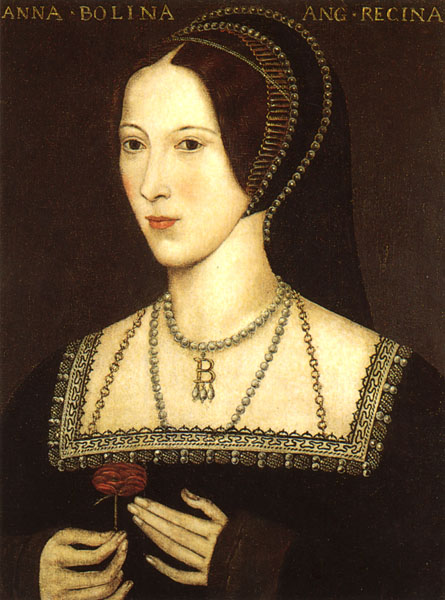
Anne Boleyn

In the years to follow, Catherine ‘continued with her appeal to Rome against the divorce and would listen to nobody but a few Spanish advisers. She rejected the universities opinion and procured from the Pope [contrary to the law as it happened] declarations and admonitions followed by excommunication and interdiction against the king and the whole realm… The Duke of Suffolk was subsequently sent to Bugden, near Huntingdon, where Catherine was… [and] proceeded to break up her court and dismissed many servants, leaving but a few who were clearly instructed to serve her as a princess, not a queen. Those who would not so serve her were dismissed’ (http://www.thereformation.info/Divorce.htm). She was separated from her daughter and lived in ‘several dank and unhealthy castles and manors with just a few servants. However, she seldom complained of her treatment and spent a great deal of time at prayer (http://tudorhistory.org/aragon/). Four months before the downfall of Anne Boleyn, who was arrested and executed on 19 May, Catherine died on 7 January 1536 ‘at Kimbolton Castle and was buried at Peterborough Abbey’ (ibid).

Friday, 19 December 2014

Henry VIII: secret marriage with Anne Boleyn and the break with Rome

On 22 August 1532 William Warham, the Archbishop of Canterbury, died and this ‘allowed Henry to press for the institution of [Thomas] Cranmer’ (http://www.newadvent.org/cathen/04024a.htm) as his successor. Though the pallium was ‘granted to him by’ (ibid) pope Clement VII, ‘Almost immediately after his consecration Cranmer proceeded to pronounce judgment upon the divorce’ (ibid) between Henry VIII and Catherine of Aragon.
It would be appropriate to point out that dates given within this blog entry are basically on the Julian Calendar, in which, ‘New Year’s Day had been March 25... Thus, 24 March 1532 was followed the next day by 25 March 1533′ (http://books.google.co.uk/books?id=MvXREWlRtPUC&pg=PA190&lpg=PA190&dq=julius+calendar+1532+new+year%27s+day&source=bl&ots=jK3UzKynyl&sig=). Therefore, in theory, the following accounts should have occurred after the consecration of Crammer: ‘In January 1532 Parliament met again’ (http://www.thereformation.info/Divorce.htm) and Henry attacked ‘the oath of the clergy to the Pope that had been disclosed by [Thomas] Cromwell’ (ibid) and replaced it with the oath of the clergy to the King, which ‘was the physical act that made the break with Rome a reality. But it still kept catholicism as the faith’ (ibid). In the meantime, the Pope ‘prepared’ the third breve addressed to Henry ‘on 25 January 1532 which named Anne [Boylen] for the first time and firmly rebuked Henry for cohabiting with her. It further ordered him to dismiss Anne and take back Catharine; if he failed to do so within one month of receiving the breve he would be excommunicated’ (ibid). However, this breve was actually ‘posted at Dunkirk and Bruge on 21 and 23 January 1533′ (ibid), nearly a year later.
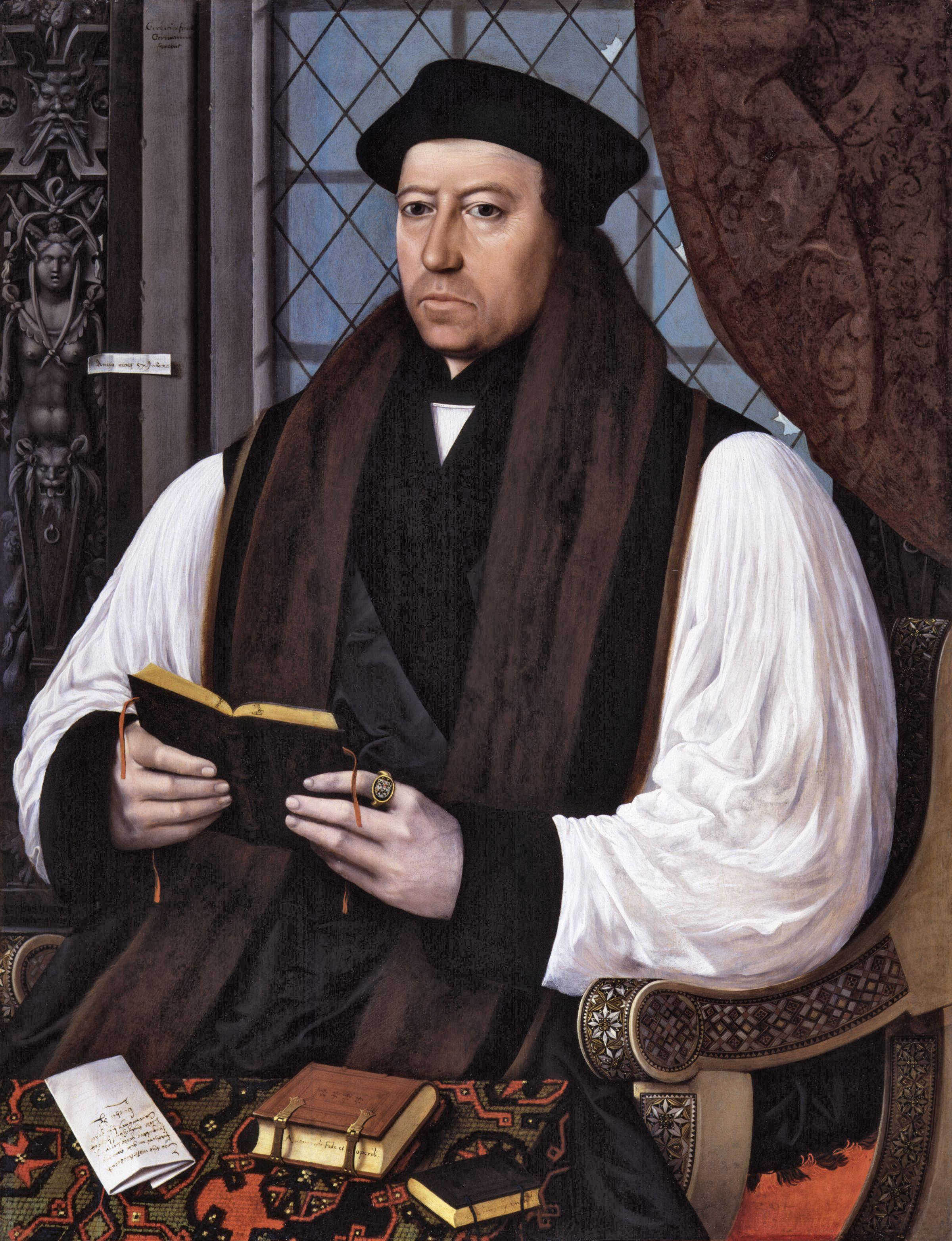
Thomas Cranmer

Coincidently, the day Clement ‘prepared’ the third breve fell upon one of the same dates when Henry alleged to contracted a secret marriage with his mistress. By that time, it became clear that Anne Boylen was pregnant and in order to secure the legitimacy of the child to be born, Henry ‘contracted a secret marriage with Anne Boleyn’ (ibid) on either ‘St Erkwald`s Day, 14 November 1532′ (ibid) or ‘about St Paul`s Day, 25 January’ (ibid) 1532*. On this occasion, however, Cranmer ‘was not present and did not learn of it until a fortnight later’ (ibid). Meanwhile, ‘the convocations of the clergy and a meeting of parliament concluded that appeal to Rome was not necessary’ (ibid). As things got this far, Henry ‘declared his marriage to Catherine invalid’ (http://www.fsmitha.com/h3/h18-eu1.htm), and as for his marriage to Anne, ‘Cranmer, in May, 1533, declared to be valid’ (http://www.newadvent.org/cathen/04024a.htm). As a result, ‘Anne Boleyn was consequently crowned on June the 1st’ (ibid).
*The blog author modified the year given as 1533 in the quoted web site to 1532 because in the Julian Calendar, January 1533 comes after May 1533, when Cranmer acknowledged this secret marriage valid.
In the meantime, Catherine ‘was summoned on 10 May 1533 to appear in a matrimonial court but did not appear. Neither did she appear on the next fifteen days on which she was cited. Eventually she was cited for contumacy and by the assent of those present declared divorced on 25 May, and the marriage declared void and of no effect’ (http://www.thereformation.info/Divorce.htm). Now, despite the huge efforts Henry had made for securing him a male heir, ‘On 7 September 1533 Queen Anne gave birth to Elizabeth’ (ibid), a girl child.

Tuesday, 16 December 2014

Henry VIII - points of dispute in the divorce case and 'the supreme head'

Whilst the Pope Clement VII was busy working on negotiating with the Holy Roman Emperor in 1529, Henry VIII ‘finally sent the Earl of Wiltshire, Dr Lee, Bishop of York, and Stokesley Bishop of London as delegates to the Pope then at Bologna where he was meeting with the Emperor, Charles V. Again Clement ducked the issue and said he would consider it when he returned to Rome… Henry’s response was to… obtain the opinion of the Divines of leading universities in Europe for their opinion about a divorce’ (http://www.thereformation.info/Divorce.htm).
It would be important to summarise the points of dispute claimed from the both sides: while Henry argued that his marriage to Catherine had been against God’s law, making use of Leviticus 20:16 to back up his case, Catherine was adamant that ‘she and Arthur, her first husband and Henry’s brother, did not consummate their marriage and therefore were not truly husband and wife’ (http://tudorhistory.org/aragon/). Moreover, on contrary to Henry’s claim, the Rome dissected what Leviticus had actually meant was ‘you should not marry your brother’s wife while he was still alive’ (http://www.historylearningsite.co.uk/henry_catherine_divorce.htm). In addition, opposing to what shall happen as a result of such forbidden marriage, ‘Catherine and Henry were far from childless, and still had one living child. But that child was a girl, and didn’t count in Henry’s mind’ (http://tudorhistory.org/aragon/). It should be noted that Catherine also ‘appealed directly to the Pope… since her nephew was Charles V, the Holy Roman Emperor… not only to retain her position, but also that of her daughter Mary’ (ibid).
Consequently, the twelve of the Divines of leading universities in Europe, who responded to Henry’s request, concluded as following: ‘affirming plainly his marriage, in case as it standeth, both to be unlawful, and repugnant to the express word of God: and that no man is able to dispense with the same’ (http://www.thereformation.info/Divorce.htm).
Henry VIII

In the following year, it seems that Henry changed his strategy for appealing his case directly to Catherine’s nephew and appointed Thomas Boylen, in January 1530, along with other bishops, ‘to go to the Emperor Charles V, and explain to him the king’s reasons for seeking a divorce from his aunt, Catherine of Arragon. The pope [Clement VII] and the emperor at that time had met together at Bologna, and the ambassadors were further commissioned to treat with both of them, and with other potentates, for a general peace. But, of course, the main object was to counteract, as far as possible, the influence which the emperor would bring to bear upon the pope in favour of Catherine. The ambassadors, however, failed to impress the former with the justice of the king’s cause; and the latter very naturally kept his sentiments to himself’ (http://www.luminarium.org/encyclopedia/thomasboleyn.htm). This followed an issue of breve by Clement on 7 March 1530, in which, the Pope indicated that ‘he knew of Henry`s intention to seek a decision elsewhere’ (http://www.thereformation.info/Divorce.htm) and pronounced ‘censure against those who threatened to have the king’s divorce suit decided by an English tribunal, and forbade Henry to proceed to a new marriage before a decision was given in Rome (http://www.newadvent.org/cathen/04024a.htm). In the beginning of the following year, on 5 January 1531. the Pope further ‘issued a breve [warning letter] that peremptorily warned of excommunication if Henry proceeded to a second marriage before the existing marriage state was decided’ (http://www.thereformation.info/Divorce.htm). Reacting to this, in March 1531, Henry ‘sent the matter before Parliament’ (ibid), in which, it was explained that Henry had consulted with ‘the chief universities of all christendom, to know their opinion and judgment’ (ibid) on his marriage to Catherine, and ‘The replies from the universities were produced and read out. The significance of the decisions was to demonstrate that the Pope was not what he claimed, and secondly, he presumptuously took unto himself powers that he was not able to dispense’ (ibid). As a result, the prelates were made to call Henry ‘”the supreme head of the Church of England” which they had never admitted before’ (ibid) and consequently the king ‘extorted a vast sum of money from the English clergy upon the pretext that the penalties of præmunire had been incurred by them through their recognition of the papal legate, and soon afterwards he prevailed upon Parliament to prohibit under certain conditions the payment of annates to Rome’ (http://www.newadvent.org/cathen/04024a.htm). Thus, in effect, the English Reformation has been launched.

Monday, 15 December 2014

Pope Clement VII's escape and Cardinal Thomas Wolsey's downfall

After the summer, regarding to Henry VIII's divorce issue, Cardinal Campeggio, the papal representative, went back to ‘England by the end of September, 1528, but the proceedings of the legatine court were at once brought to a standstill by the production of a second dispensation… in the form of a Brief… The production of the Brief, now commonly admitted to be quite authentic, though the king’s party declared it a forgery, arrested the proceedings of the commission for eight months’ (http://www.newadvent.org/cathen/04024a.htm), while pope Clement VII managed to escape from being a prisoner in the Castle of St. Angelo by disguising himself as a peddler and ‘returned to a depopulated and devastated Rome… in October 1528′ (http://www.fsmitha.com/h3/h18-eu1.htm).
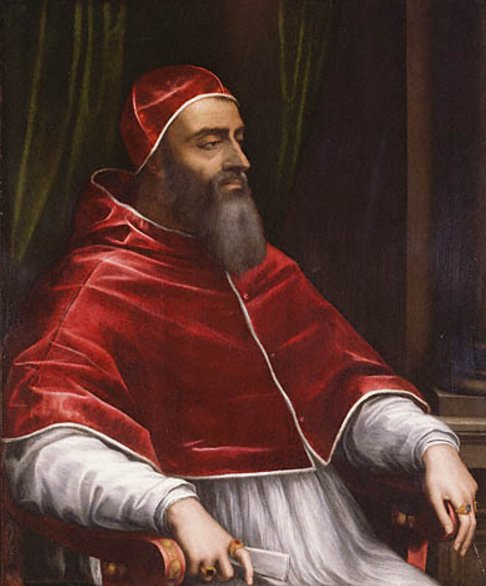
Pope Clement VII


Eventually, on 8 November 1528, Henry ‘gave a masterful speech to the country’s nobles at Bridewell, London… explaining that Catherine was noble and virtuous and that in other circumstances he would marry he[r] again. But because of what had happened he lived in “detestable and abominable adultery” (http://www.historylearningsite.co.uk/henry_catherine_divorce.htm). This was followed by a change in the continental political tide that saw Francis I and Charles V ‘agreed on a Treaty at Cambrai… As a result Wolsey’s grand plan for conservative reform and England holding the balance of power in Europe, fell by the wayside’ (http://www.thereformation.info/Divorce.htm). This was a fatal blow for Cardinal Wolsey’s political life, who ‘was ordered to leave London and live in much lesser circumstances in York [where he was the archbishop]’ (http://www.historylearningsite.co.uk/henry_catherine_divorce.htm). Additionally, ‘In a final and almost bizarre act the kings’ officials ransacked Campeggio’s bags before he was allowed to leave the country at Dover. Henry had hoped to find the decretal which might have been used to secure the divorce. But it was not found’ (http://www.thereformation.info/Divorce.htm).

To read the text in full: http://wrex2009.wordpress.com/2014/11/21/the-divorce-between-henry-viii-and-catherine-of-aragon/

Friday, 12 December 2014

Pope Clement VII's initial reaction to Henry VIII' plea for divorce

Meanwhile, in the continent, Francis I of France and Charles V, the Holy Roman Emperor, were at war and Pope Clement VII, who supported the former, had to witness German mercenaries came to attack Rome; ‘On the 5th of May they reached the walls, which… were almost undefended. Clement had barely time to take refuge in the Castle of Sant’ Angelo, and for eight days the “Sack of Rome” continued amid horrors almost unexampled in the history of war (http://www.newadvent.org/cathen/04024a.htm). In this circumstance, Henry ‘asked Cardinal Wolsey to appeal to Pope Clement VII for an annulment [of his marriage to Catherine] … But, unwilling to anger Catherine of Aragon’s nephew – the most powerful ruler in Europe, the Holy Roman Emperor Charles V – the Pope refused’ (http://www.bbc.co.uk/history/people/henry_viii). More precisely, it is argued that Clement simply ‘did what he had to do – prevaricate and procrastinate. What this charade demonstrated was that the earthly concerns of the prelates – their personal security and wealth, was the determining factor even in the weightiest of decisions. Indeed it was the Church’s involvement in temporal politics that eventually determined the Pope’s decision and had very little to do with the rule of the Scriptures or perceived rules of consanguinity’ (http://www.thereformation.info/Divorce.htm). Having faced to the Pope’s refusal, Henry and Wolsey sought for an alternative way, to ask ‘the Pope to allow the matter to be resolved “locally”, ie Wolsey as Papal Legate… [This was] to declare the Pope incapacitated and Wolsey would hold a Convocation of cardinals to agree the matter of the divorce. In the event a second papal representative, Cardinal Campeggio, was sent to help Wolsey determine the facts – with instructions to prevaricate while Clement sought to extricate himself from the dominance of Charles V. Importantly the Pope declined them any plenary powers and reserved the decision to himself’ (ibid).

Charles V, the Holy Roman Emperor


With these instructions in his mind, Cardinal Campeggio ‘first tried to dissuade Henry from divorce and when he got nowhere turned to Catherine to seek her agreement to the king’s wishes’ (ibid). It would be worth to point out that ‘At first, Catherine was kept in the dark about Henry’s plans for their annulment and when the news got to Catherine she was very upset’ (http://tudorhistory.org/aragon/). Rejections from the both sides made the cardinals – Campeggio and Wolsey – being ‘left with nothing else to do but proceed to trial with the instruction [to Campeggio] that the decretal was only to be shown to the king, and then burnt' (http://www.thereformation.info/Divorce.htm). Regarding to this document, it is also argued that ‘The commission was to be shown to no one, and was never to leave Compeggio’s hands. We do not know its exact terms’ (http://www.newadvent.org/cathen/04024a.htm). Whichever the case, ‘Both Henry and Catherine appeared before the court and made representations… On 23 July 1528 the court was due to report its decision at which Campeggio foolishly sought to invoke the Roman courts’ timetable and take two months vacation until October’ (http://www.thereformation.info/Divorce.htm).

For reading the text in full: http://wrex2009.wordpress.com/2014/11/21/the-divorce-between-henry-viii-and-catherine-of-aragon/