Sunday, 28 September 2014

Plato's proto-feminism and Spartan women

Whilst eugenics is largely approved in his ideal state, when it comes to make differentiations in each individuals, sexism seems to have little room for Plato, who suggests ‘women in the guardian class should receive the same education as men, so that the best of them can assist in war and governance’ (http://philosophynow.org/issues/90/Platos_Just_State), despite the background where, ‘the ancient Greeks held a rather low opinion of women’ ( http://www.albany.edu/womensstudies/journal/2007/dubois.html). Plato’s argument for gender equality could be acknowledged as a logical extension of his fundamental principle for the ideal state, in which, ‘jobs and functions in an ideal state ought to be distributed according to one’s nature, inclination, and capability’ (ibid). Then he asks ‘if anything aside from physiology separates men and women; he soon concludes not’ (ibid). Therefore, men and women ‘are endowed equally with “natural capacities” for all “administrative occupations,” including the Guardianship (rule) of the city as well as its defense (sic), and that there is no sufficient difference between them to justify the exclusion of women from the most important duties of the state’ (ibid). Even though he believes that ‘since women are traditionally the physically weaker of the sexes, nature also dictates they be given a “lighter share” of these duties in keeping with their (assumed) level of strength’ (ibid), in terms of providing fair opportunities, ‘Plato advocates a system of equal education for men and women being raised as Auxiliaries (soldiers) and Guardians (philosopher-rulers)’ (ibid).

Spartan gym exercises
Again, it is quite interesting that referring to the education of the guardian class, Plato gives a suggestion that ‘women ought to be allowed to exercise naked in the gymnasia (athletic training-grounds) alongside the men as part of their physical education regimen, to keep them healthy and fit for military service’ (ibid) since this particular practice coincides with what could be seen among Spartan women, who ‘could enjoy athletics (done in the nude like men), and even drink wine’ (http://www.ancient.eu.com/sparta/). It is also worth to mention that ‘Women in Sparta had a better lot than in other Greek city-states. In Sparta they could own property which they often gained through dowries and inheritances. In fact, women became amongst the richest members of society, as their men were killed in the many wars, and eventually controlled 2/5th of Spartan land. In addition, Spartan women could also move around with reasonable freedom… All of these freedoms would have been unacceptable in other Greek poleis’ (ibid). Even though it could be assumed that Plato might have taken some ideas from Spartan politics, in terms of gender equality, it has been pointed out that he ‘obviously held women in a lower regard than men’ (http://www.albany.edu/womensstudies/journal/2007/dubois.html); for instance, he ‘posits that cowardly or immoral men are reborn as women’ (ibid), therefore, he could be regarded to have advocated ‘a “proto-feminist” viewpoint’ (ibid) at the best.

Saturday, 27 September 2014

Plato on eugenics and discouraging of family life

The system used for upbringing Spartan soldiers might have inspired the following account recommended for Plato’s ideal state; that ‘the traditional form of the family should be done away with. Men should have women and children in common, such that no man knows who his children are or has excessive love for one woman in particular. Even mothers are not allowed to know who their children are. Their children are taken from them after birth, and they are given other children to suckle as long as they have milk’ (http://philosophynow.org/issues/90/Platos_Just_State). 
Furthermore, in terms of reproduction, Plato even goes further to seemingly the field of eugenics, when he says ‘the best of either sex should be united with the best as often [as possible], and the inferior with the inferior as seldom as possible’ (ibid), which may remind of Spartan practice of ‘killing weak and deformed infants’ (ibid).
An old manuscript of The Republic by Plato

In Republic, Plato also argues about ‘the policy of ensuring “judicious matings”‘ (http://jme.bmj.com/content/24/4/263.full.pdf). In which, ‘He proposed that marriage for the guardian classes (guardians were the premier class of Athenian citizens, selected by their natural capacities and attainments to govern the state) be abolished and that provision be made for men and women of the same natural capacities to made. He drew an analogy with the selective breeding of sporting dogs and horses in order to obtain the desired stock… Inferior members of the guardian classes should be discouraged from reproducing. Only the best of the offspring should be kept in the guardian class and the inferior children should be relegated to the civilian classes’ (ibid). As for child bearing, he continues that ‘The newborn children were to be taken from their mothers and reared in special nurseries in a separate quarter of the city. Family life was to be discouraged as it provided a distraction from the business of governing, of defending or extending the city state by conquest. Any children born defective would be “hidden away” in some appropriate manner. This may actually a euphemism for instance. However neither infanticide nor exposure as practised in Sparta and other Greek cities was recommended by Plato for his republic’ (ibid).

For reading the text in full: http://wrex2009.wordpress.com/2014/09/12/platos-republic-with-its-historical-background/

Thursday, 25 September 2014

Spartan class system: governors, soldiers and others

Sparta was governed by ‘two hereditary kings from two separate families… The kings were also priests of Zeus and they sat on the council of elders known as the gerousia. This body consisted of 28 over-60 years of age males who held the position for life. The gerousia led the citizen assembly, probably proposing issues on which to vote and it was also the highest court in Sparta. The assembly (Ekklēsia) met once a month and was open to all citizens who voted by the simple method of shouting. There was also an executive committee of five ephors (ephoroi) chosen by lot from the citizen body, able only to serve for a maximum of one year and who were ineligible for future office… Just how these different political elements interacted is not known for certain but… It may also explain Sparta’s reputation as being a conservative state slow to make decisions in foreign policy’ (http://www.ancient.eu.com/sparta/). 
Spartan gerousia

In terms of soldiers, all Spartan citizens were subjected to ‘a strong emphasis on military training and frugal living in communal mess halls where simple food such as barley meal, cheese, figs and wine were the norm. From the age of seven, males had a militaristic upbringing known as the agōgē where they were separated into age groups and lived in barracks. These youths pursued rigorous athletic and military training which became even more demanding from the age of 20, when they joined common mess halls (syssition)’ (ibid). Spartan citizens ‘did not indulge in farming (nor agricultural) activities themselves but devoted their time to military training, hunting, war, and politics’ because the role of producers were the lot of lower classes, namely helots and periokoi' (ibid).

For reading the text in full: http://wrex2009.wordpress.com/2014/09/12/platos-republic-with-its-historical-background/

Monday, 22 September 2014

Plato's 'just state' - its hierarchy, harmony and three classes

Having established logically sound criticisms against democracy, now Plato begins to build up his hypothetical ideal state. In doing so, it is said that one of his key elements in Republic is ‘to put forth a conception of the “just state”‘ (http://philosophynow.org/issues/90/Platos_Just_State). The definition of justice, according to Plato, is ‘“To do one’s own business and not to be a busybody is justice.” (Republic 433b.)’ (ibid) Therefore, it follows that ‘In the just state, each class and each individual has a specific set of duties, a set of obligations to the community which, if everyone fulfils them, will result in a harmonious whole (ibid). The idea seems like corresponding to Plato’s philosophical world view that ‘everything in nature is part of a hierarchy, and that nature is ideally a vast harmony, a cosmic symphony’ (ibid), therefore, the just state should be hierarchical like nature and individuals should be ‘ranked according to their aptitudes, and definitively placed in the social hierarchy’ (ibid) because ‘justice consists in fulfilling one’s proper role – realizing one’s potential whilst not overstepping it by doing what is contrary to one’s nature’ (ibid).
Plato

In Republic, Plato discusses further details of his ideal state, which consists of ‘three major classes, corresponding to the three parts of the soul. The guardians, who are philosophers, govern the city; the auxiliaries are soldiers who defend it; and the lowest class comprises the producers (farmers, artisans, etc)’ (ibid). In this class society, ‘People are allowed to have only one occupation – namely that for which they are best suited by nature’ (ibid), and since ‘Only what is conducive to temperate living is encouraged… Neither wealth nor poverty is permitted, as each leads to vice’ (ibid).
Interestingly enough, the notion of this ideal state consists of three major classes, which is simply divided in governors, soldiers, and all the rest, seems to share some similarities with the political system of the winner of the Peloponnesian War, Sparta.

For reading the text in full: http://wrex2009.wordpress.com/2014/09/12/platos-republic-with-its-historical-background/

Sunday, 21 September 2014

Plato's criticism of democracy

Now, Plato as a matured philosopher and a political thinker, launches more sophisticated counter-arguments against democracy, fundamentally by ‘putting into question the peoples’ ability to rule justly’ (http://cliojournal.wikispaces.com/Plato’s+Critique+of+Democracy). First of all, ‘The Athenian belief that all men are equal and so should have an equal opportunity in politics is severely criticised by Plato’ (ibid) because those elected by popular vote are ‘not the wisest and ablest… but the demagogues best versed in oration and rhetoric’ (ibid), who have ‘no skill or aim other than the desire for power itself’ (ibid). Subsequently, Plato accuses ‘Democratic governance, with its ultimate goal being liberty’ (ibid) of being ‘prone to the rise of anarchy and rebellion due to a distinct lack of discipline, sense of duty and respect for order’ (ibid). In short, ‘Pervasive liberty means that people are free to do what they desire, not what they are suited to… In this way a democratic society is one which obeys its basest wants… those of food, sex and money, above the more civilly beneficial elements of the psyche: reason and indignation’ (ibid), therefore, ‘the fundamental ideal upon which democracy is built’ (ibid) is to be blamed because ‘full liberty leads to anarchy’ (ibid). 
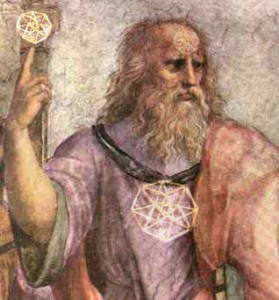
Plato

Finally, and most importantly, Plato points out inherent class tensions as his ‘most damning criticism of the democratic system. Plato makes evident the disunity between the classes, with a distinct lack of respect and discipline in the ordinary citizen for authority. This stems from the lack of incentive for the ruled to submit to the decisions of the rulers’ (ibid). In summary, Plato argues that ‘outright liberty and political equality do not provide true happiness and justice for the majority of citizens or in the state itself’ (ibid), in line with this, he ‘values overall happiness and justice far more than liberty’ (ibid) of individuals. As a result, ‘An important element of Plato’s imagined utopian city is that people must commit to the profession in which they have natural talent. This corresponds to a sense of social justice and a unified and efficient society, a level of cohesion which Plato does not believe can be achieved in democracy’ (ibid). Consequently, Plato ‘advocates rule by not the greatest orator or panderer but the greatest and most morally righteous of citizens’ (ibid) – in other words, philosopher kings.

For reading the text in full: http://wrex2009.wordpress.com/2014/09/12/platos-republic-with-its-historical-background/
Saturday, 20 September 2014

Athenian intellectuals - including Plato - on democracy

Plato, as a young man, began his writing career most likely being passionately provoked by the death of his mentor Socrates. He grew up in Athens through the political turmoil with the Peloponnesian War in its background. During that period, he must have witnessed a couple of fatal political wrong doings – the execution of eight generals in 406 BCE and of Socrates in 399 – both took place under the rule of democracy, which eventually led Athens to the defeat in the war. Plato must have formed his political views based on some intellectual anti-democrats during that time, including his mentor Socrates and one of whose pupils Xenophon. It is said that these intellectuals, including Plato himself, allegedly argued that ‘the majority of the people, because they were by and large ignorant and unskilled, would always get it wrong. In these intellectuals’ view, government was an art, craft or skill, and should be entrusted only to the skilled and intelligent, who were by definition a minority. They denied specifically that the sort of knowledge available to and used by ordinary people, popular knowledge if you like, was really knowledge at all. At best it was mere opinion, and almost always it was ill-informed and wrong opinion’ (http://www.bbc.co.uk/history/ancient/greeks/greekcritics_01.shtml). 
Xenophon

Moreover, probably taking an example of Pericles into their account, they viewed that the masses were ‘easily swayed by specious rhetoric – so easily swayed that they were incapable of taking longer views or of sticking resolutely to one, good view once that had been adopted. The masses were, in brief, shortsighted, selfish and fickle, an easy prey to unscrupulous orators who came to be known as demagogues. Demagogue meant literally ‘leader of the demos’ (‘demos’ means people); but democracy’s critics took it to mean mis-leaders of the people, mere rabble-rousers’ (ibid). Ultimately, Xenophon concluded in a fictional conversation between Pericles and Alcibiades, in his work Memoirs of Socrates, that ‘democracy is really just another form of tyranny’ (ibid).

For reading the text in full: http://wrex2009.wordpress.com/2014/09/12/platos-republic-with-its-historical-background/

Friday, 19 September 2014

Athenian democracy: condemnation of eight generals and Socrates

In 406 BCE, during the period of restored democracy, Athens experiences ‘the biggest single practical blunder in the democracy’s history: the trial and condemnation to death of all eight generals involved in the pyrrhic naval victory at Arginusae. The generals’ collective crime, so it was alleged by Theramenes (formerly one of the 400 [oligarchs]) and others… was to have failed to rescue several thousands of Athenian citizen survivors. Passions ran high… during a crucial Assembly meeting, over which Socrates may have presided… The resulting decision to try and condemn to death the eight generals collectively only hastened Athens’ eventual defeat in the war’ (http://www.bbc.co.uk/history/ancient/greeks/greekcritics_01.shtml). Eventually, ‘In 404 BCE, the Spartans caught the Athenian fleet on the beach at Aegospotamoi (“Goat Islands”) and destroyed it. After a period of siege, while the Spartans blockaded the harbors of Athens, the city surrendered, and its fortunes fell into the hands of the so-called Thirty Tyrants. These were Athenians selected by the Spartans to form a puppet government by the Spartans (http://www.stoa.org/projects/demos/article_democracy_development?page=6).Though this tyranny ‘lasted only one year before pro-democracy forces regained control of the city’s affairs’ (ibid), it should be pointed out that the Thirty Tyrants included Critias, one of Plato’s relatives. 
Socrates

Soon after the restoration of democracy, in 399, Plato’s mentor Socrates ‘ was charged with impiety… and, a separate alleged offence, corrupting the young’ (http://www.bbc.co.uk/history/ancient/greeks/greekcritics_01.shtml). In other words, Socrates was condemned for his religious views ‘were deeply unorthodox, his political sympathies were far from radically democratic, and he had been the teacher of… Critias’ (ibid). In the trial, Socrates didn't do ‘anything to help defend his own cause, so that more of the 501 jurors voted for the death penalty than had voted him guilty as charged in the first place. By Athenian democratic standards of justice,… the guilt of Socrates was sufficiently proven’ (ibid). This trial and the execution of Socrates took place in front of his disciples’ eyes and thus ‘it helped decisively to form one of democracy’s – all democracy’s, not just the Athenian democracy’s – most formidable critics: Plato’ (ibid).

For reading the text in full: http://wrex2009.wordpress.com/2014/09/12/platos-republic-with-its-historical-background/