Monday, 8 December 2014

Henry VIII: his use of Leviticus 20:16

It is said that Henry, being ‘tired of Queen Catherine,… and passionately enamoured of Anne Boleyn, had made known to [Thomas] Wolsey in May, 1527, that he wished to be divorced. He pretended that his conscience was uneasy at the marriage contracted under papal dispensation with his brother’s widow (http://www.newadvent.org/cathen/04024a.htm), though others argue that the year 1527 ‘may be when he decided that a divorce was needed. [but] The truth is that historians simply do not know’ (http://www.historylearningsite.co.uk/henry_catherine_divorce.htm). Whatever the case, once he made a decision to divorce Catherine, Henry began to act ‘to solicit from the Holy See contingently upon the granting of the divorce, [and] a dispensation from the impediment of affinity in the first degree [an impediment which stood between him and any legal marriage with Anne on account of his previous carnal intercourse with Anne’s sister Mary]’ (http://www.newadvent.org/cathen/04024a.htm). In short, Henry needed to obtain a permission from judicial authority of the Roman Catholic Church to divorce his wife Catherine, and a pardon for having an affair with Mary Boleyn, in order to marry her sister Anne because ‘the beliefs within the Catholic Church were clear and simple. Only the Pope could annul a marriage and as the Church believed in the sanctity of marriage and family, this was a reasonably rare occurrence. In many senses, royal families in Western Europe were expected to set the standards that others should follow’ (http://www.historylearningsite.co.uk/henry_catherine_divorce.htm). 
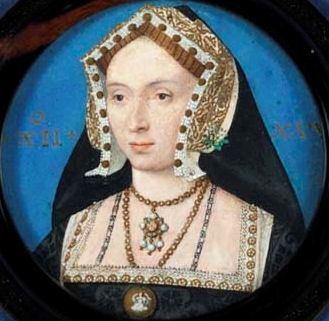
Mary Boleyn

In his petition to the Pope, ‘Henry used his knowledge of the Bible to justify his request for a marriage annulment. Henry used the Old Testament [Leviticus Chapter 20 Verse 16] where it stated:
“If a man shall take his brother’s wife, it is an impurity; he hath uncovered his brother’s nakedness; they shall be childless.”
Henry argued that his marriage to Catherine had been against God’s law from the start despite the Pope’s blessing for it to go ahead in 1509. He was therefore living in sin and that the Pope had to annul his marriage so that he could rectify this. As “Defender of the Faith”… Henry believed that such an annulment was almost a foregone conclusion’ (ibid).

Friday, 5 December 2014

Henry VIII's decision to divorce Catherine - 1527

1527 was an important year for Henry VIII, not only regarding to the divorce case but also in the field of international politics. Despite his wife Catherine had ‘her family ties to Catholic Spain and her nephew Charles had succeeded Maxmillian as Holy Roman Emperor… Henry had grown tired of Charles V and allied himself with France, now ruled by Francis I, and he betrothed daughter Mary to the Dauphin (http://www.thereformation.info/Divorce.htm). The negotiation for this new alliance resulted in a treaty on 30 April, 1527, that stated Princess Mary ‘should be married either to Francis himself or to his second son Henry Duke of Orleans. But the real object was only to lay the foundation of a perfect mutual understanding between the two kings’ (http://www.luminarium.org/encyclopedia/queenmary.htm). Interestingly enough, this treaty was later associated with a following allegation:
‘It was during this negotiation, as Henry afterwards pretended, that the question was first raised whether Henry’s own marriage with Catherine was a lawful one. Grammont, Bishop of Tarbes, who was one of the ambassadors sent over by Francis to ask the princess in marriage, had, it was said, started an objection that she might possibly be considered illegitimate on account of her mother having been once the wife of her father’s brother. The statement was a mere pretence to shield the king when the unpopularity of the divorce became apparent. It is proved to be untrue by the strongest evidence, for we have pretty full contemporary records of the whole negotiation. On the contrary, it is quite clear that Henry, who had already for some time conceived the project of a divorce, kept the matter a dead secret, and was particularly anxious that the French ambassadors should not know it, while he used his daughter’s hand as a bait for a new alliance’ (ibid).
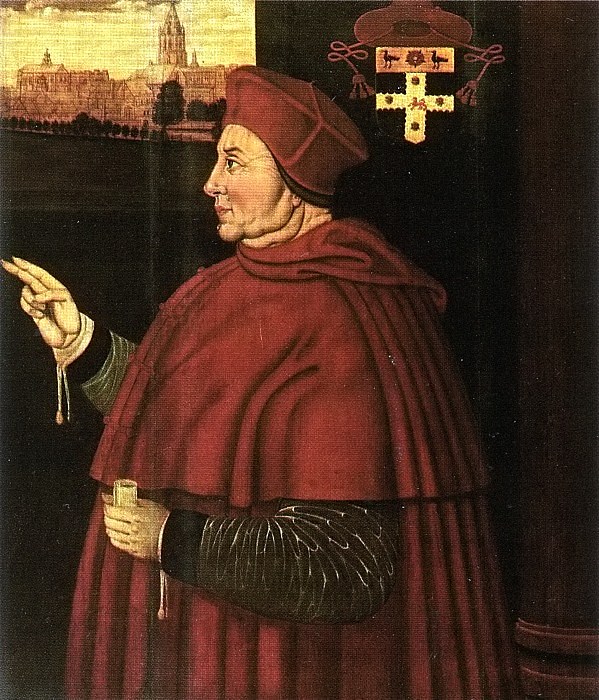
Thomas Wolsey


In the following month, it is said that Henry, being ‘tired of Queen Catherine,… and passionately enamoured of Anne Boleyn, had made known to [Thomas] Wolsey in May, 1527, that he wished to be divorced. He pretended that his conscience was uneasy at the marriage contracted under papal dispensation with his brother’s widow (http://www.newadvent.org/cathen/04024a.htm), though others argue that the year 1527 ‘may be when he decided that a divorce was needed. [but] The truth is that historians simply do not know’ (http://www.historylearningsite.co.uk/henry_catherine_divorce.htm). 

Wednesday, 3 December 2014

Henry VIII in 1520s: background of his decision for divorce

It should be pointed out that ‘No one is sure when Henry decided that his marriage to Catherine had to end simply because the evidence does not exist that can pinpoint an exact date’ (http://www.historylearningsite.co.uk/henry_catherine_divorce.htm), nevertheless, it would be worthwhile to present some known facts and allegations in chronological order from early 1520's, as it follows:

First of all, it is known that Henry ‘had at least two mistresses that we know of: Elizabeth “Bessie” Blount and Mary Boleyn’ (http://tudorhistory.org/aragon/). It is also said that ‘There were rumours in court of Henry wanting a divorce as early as 1520 but this was probably nothing more than mere court gossip based on no fundamental facts’ (http://www.historylearningsite.co.uk/henry_catherine_divorce.htm).
Since Henry ‘was acutely aware of the importance of securing a male heir during his reign’ (http://www.bbc.co.uk/history/people/henry_viii), his daughter Mary’s ‘prospects in life were made a matter of sordid bargaining from the first’ (http://www.luminarium.org/encyclopedia/queenmary.htm). She ‘was little more than two years old when she was proposed in marriage to the dauphin, son of Francis I. Three years afterwards the French alliance was broken off, and in 1522 she was affianced to her cousin the young emperor Charles V by the Treaty of Windsor. No one, perhaps, seriously expected either of these arrangements to endure… [and] not many years passed away before Charles released himself from this engagement’ (ibid). Some argue that this marriage proposal for Mary already triggered the very issue; ‘whether the marriage between the king and the mother of lady Mary, were good or no ?’ (http://www.thereformation.info/Divorce.htm).


Thomas Boleyn


Whilst ‘the Cardinal de’ Medici was eventually chosen pope’ (http://www.newadvent.org/cathen/04024a.htm) as Clement VII on 18 November, 1523, Henry VIII was told from his physicians ‘either in 1524 or 1525… that Catherine was unlikely to give birth again’ (http://www.historylearningsite.co.uk/henry_catherine_divorce.htm). In the meantime, Thomas Boleyn, father of Mary Boleyn – one of Henry’s mistresses, was ‘first ennobled as Viscount Rochford’ (http://www.luminarium.org/encyclopedia/thomasboleyn.htm) on 16 June, 1525. It is said that ‘There cannot be a doubt that not only his elevation to the peerage, but several earlier tokens of royal favour besides, were due to the fascination his daughter had begun to exercise over the king’ (ibid). A further twist then followed. By 1526, Henry began ‘to separate from Catherine because he had fallen in love with one of her ladies [and sister of one of his mistresses]: Annee Boleyn’ (http://tudorhistory.org/aragon/).

For reading the text in full: http://wrex2009.wordpress.com/2014/11/21/the-divorce-between-henry-viii-and-catherine-of-aragon/

Monday, 1 December 2014

Henry VIII - his first marriage and the title of 'Defender of the Faith'

14 months after the death of his eldest son, Henry VII ‘was [still] interested in keeping [hid deceased son's young widow] Catherine’s dowry’ (http://tudorhistory.org/aragon/) and made a new arrangement to betroth Catherine of Aragon to his younger son Henry, who now became hair to the English throne but ‘was too young to marry at the time’ (ibid). However, ‘By 1505, when Henry was old enough to wed, Henry VII wasn't as keen on a Spanish alliance, and young Henry was forced to repudiate the betrothal. Catherine’s future was uncertain’ (ibid) until Henry VII dies in 1509, when Prince Henry duly succeeds his father’s throne as King Henry VIII, at the age of eighteen. Interestingly, it is said that ‘one of the new young king’s first actions was to marry Catherine’ (ibid). In doing so, Henry ‘obtained the papal dispensation required to allow him to marry his brother’s widow’ (http://www.bbc.co.uk/history/people/henry_viii) and married Catherine on 24 June, 1509. It must be important to point out that at this stage, both Henry and Catherine ‘were Roman Catholics. Everybody in England was – the penalty for heresy [being found guilty of being a non-believer] was death… such was the tie to Rome and the Roman Catholic faith, that he felt it necessary to effectively get Papal permission [from Pope Julius II] to marry Catherine’ (http://www.historylearningsite.co.uk/henry_catherine_divorce.htm).
Catherine of Aragon
Although ‘In the first years of his reign Henry VIII effectively relied on Thomas Wolsey to rule for him… he joined Pope Julius II’s Holy League against France in 1511′ (http://www.bbc.co.uk/history/people/henry_viii). On top of that, in terms of his relationship with Rome, he was ‘conferred the title of Defender of the Faith’ (ibid) in 1521 by Pope Leo X ‘ for his book “Assertio Septem Sacramentorum”, which affirmed the supremacy of the Pope in the face of the reforming ideals of the German theologian, Martin Luther’ (ibid).
In the meanwhile, Henry had to struggle to produce his heir, especially a son, as it follows:
‘Shortly after their marriage, Catherine found herself pregnant. This first child was a stillborn daughter born prematurely in January 1510, but this disappointment was soon followed by another pregnancy. Prince Henry was born on January 1, 1511 and… was christened on the 5th. There were great celebrations for the birth of the young prince, but they were halted by the baby’s death after 52 days of life. Catherine then had a miscarriage, followed by… another short-lived son. On February 1516, she gave birth a daughter named Mary, and this child lived. There were probably two more pregnancies, the last recorded in 1518′ (http://tudorhistory.org/aragon/) .

For reading the text in full:  http://wrex2009.wordpress.com/2014/11/21/the-divorce-between-henry-viii-and-catherine-of-aragon/
Friday, 28 November 2014

Henry VIII in his early life- Arthur, his elder brother

Henry VIII is one of the most popular monarchs in English history. He is known as the pioneer of the English Reformation but is most notably known for having his six wives. As everything has its first time, when Henry decided to go forward for his second marriage, he had to go through inevitable obstacles associated with his first marriage; to divorce.

Henry was born as ‘the second son of King Henry VII and Elizabeth of York… on 28 June 1491 at Greenwich Palace’ (http://www.bbc.co.uk/history/people/henry_viii). Since his elder brother Arthur ‘was the Prince of Wales and heir to the throne of England… Arthur was therefore given royal responsibilities whereas Prince Henry was destined to a secular life, his possible future role might have been the Archbishop of Canterbury’ (http://www.sixwives.info/henry-viii-education.htm). Because of this reason, Henry ‘was also taught religious studies in the Roman Catholic religion’ (ibid). Whilst his parents marriage in January 1486 symbolised the unity of ‘the houses of Lancaster and York, the rivals of the Wars of the Roses’ (http://tudorhistory.org/people/arthur/), his elder brother’s name ‘was purposely chosen to evoke memories of the great British king of the same name’ (ibid); King Arthur of the round table. Moreover, negotiations for Prince Arthur’s future marriage followed soon as early as 1488-9 and Henry VII won ‘the proposal that Arthur would be married to Catherine of Aragon’ (ibid), who ‘was the youngest surviving child of Ferdinand and Isabella, the joint rulers of Spain’ (http://tudorhistory.org/aragon/). Despite this kind of political match, in this case –  to strengthen the unity between England and Spain – was common practice in those days, at this stage of betrothal, Catherine ‘was three year old… [while] Arthur was not even quite two’ (ibid).
Arthur, Prince of Wales
With further negotiations, it was agreed  in 1496 that ‘Catherine would come to England in 1500, when Arthur was 14… [and] did eventually arrive in October 1501′ (http://tudorhistory.org/people/arthur/). The marriage ‘took place 14th November 1501 in old St. Paul’s Cathedral in London… [and] After the wedding, Arthur and Catherine went to Ludlow Castle on the border between England and Wales to set up their household’ (ibid).
However, in March of the following year, ‘Arthur fell ill, possibly of tuberculosis, the plague or the dreaded “sweating sickness” and died’ (ibid) on 2 April, 1502. Now, ‘Catherine was left a young widow in a foreign country. The question of whether or not Arthur and his bride ever consummated their marriage became crucial’ (ibid) in decades later.

Wednesday, 26 November 2014

Samuel, the last Judge of ancient Israel

Samuel is the key figure who concerned to the change of the regimes in ancient Israel from the rule of Judges to the rule of sovereign Kings. The life and deeds of Samuel can be found in a couple of books in the Old Testament, which are obviously attributed to his own name. Following is a summary from the contents of these books with some extra information:
‘Samuel was a Levite, the son of Elkanah and Hannah (1 Samuel 1:1-2, 20). At a very young age his parents took him to Shiloh and consecrated him to The Lord, serving under Eli the priest (1 Samuel 1:23-2:11).
Samuel was eventually chosen by God to succeed Eli because Eli’s sons had become corrupt beyond hope (1 Samuel 2:12-26, 3:19-21). The succession became final after the Israelites temporarily lost The Ark Of The Covenant, which had been carried from The Tabernacle in Shiloh into battle against the Philistines (1 Samuel 4:1-17). Eli’s sons were killed in the battle (1 Samuel 4:11), and Eli himself died when he was told the news (1 Samuel 4:17-18).
After becoming their leader, Samuel turned the Israelites away from their gross Idolatry, and led them to an overwhelming victory over the Philistines, who had been severely troubling Israel for over 40 years (1 Samuel 7:2-17).
The victory over the Philistines was followed by a long period of peace for Israel (1 Samuel 7:13-14), during which Samuel served as a “circuit judge,” going each year from his home in Ramah, about 20 miles north of Jerusalem, around the neighboring towns… (1 Samuel 7:16).
Samuel
Samuel established regular worship of The Lord at Shiloh, where he built an altar, and he established a school of the prophets at Ramah (1 Samuel 19:20).
When Samuel grew old, and (just as had happened with Eli) it became obvious that his sons fell far short of the integrity of their father (1 Samuel 8:1-3), the people demanded a king “such as all the other nations have.”(1 Samuel 8:5). They foolishly ignored the fact that they already had a King, Almighty God, guiding and protecting them. Reluctantly, but in obedience to The Lord’s instruction… Samuel then found himself as Israel’s “king maker” – he anointed Saul as Israel’s first king (1 Samuel 10:20-24), and after Saul proved himself to be unstable and unwise, Samuel anointed Israel’s second king – David (1 Samuel 16:13).
When Samuel died, he was buried in Ramah (1 Samuel 25:1).
2 Old Testament books are named after Samuel, with, it is generally believed, multiple authors.’ (http://www.keyway.ca/htm2002/samuel.htm)
The full text with brief intro is available: http://wrex2009.wordpress.com/2011/06/01/samuel-the-first-prophet/

Wednesday, 1 October 2014

Ontological Difference - Gilles Deleuze / Martin Heidegger

Gilles Deleuze, a famous French modern thinker, argues in his Difference and Repetition(Preface to the Original Edition, translated by Paul Patton, Columbia University Press, New York, 1994, p.5), ‘The subject dealt with here is manifestly in the air. The signs may be noted’ (http://andrewburgess.wordpress.com/category/study-notes/philosophy/giles-deleuze/). This argument is followed by pointing out of some examples such as, ‘the structuralist project, based upon a distribution of differential characters within a space of coexistence; the contemporary novelist’s art which revolves around difference and repetition, not only in its most abstract reflections but also in its effective techniques; the discovery in a variety of fields of a power peculiar to repetition, a power which also inhabits the unconscious, language and art.to’ (ibid). In addition, the list of such example starts with the following one: ‘(Martin) Heidegger’s more and more pronounced orientation towards a philosophy of ontological Difference’ (ibid).
Gilles Deleuze
Though all these examples seem to be difficult to understand, it would be most plausible to make an attempt for finding any relating information about the definition of Heidegger’s so-called ontological difference to decode what these examples could mean. It is said that this concept can be explained as following:
‘Heidegger’s  so-called “ontological difference,”…distinguishes between an entity (das Seiende) and the being (das Sein) of an entity. He calls this distinction the “ontological difference.” An entity, [a being] for Heidegger is on the one hand, anything that is or can be, whether it be physical, spiritual, or whatever –  for example, God, human beings, socialism, and the number nine  are all entities. On the other [ontological] hand, he posits the “Being” of an entity, which has to do with the so-called”is-ness” or “existence” of whatever is. For him, “Being” designates what an entity is or entities are, how it/they is/are, and the fact that it/they is/are at all.’ (http://evans-experientialism.freewebspace.com/madman.htm)

Martin Heidegger