Saturday, 31 August 2013

Sir Arthur Evans and the discovery of Minoan script

The palace of Knossos in Crete was excavated by British archaeologist Sir Arthur Evans in 1900. The excavation also ‘discovered a large number of clay tablets inscribed with mysterious symbols’ (http://www.omniglot.com/writing/linearb.htm) and Evans ‘dubbed the inscriptions and the language they represented as “Minoan”’ (ibid) because he believed that ‘he had discovered the palace of King Minos, together with the Minotaur’s labyrinth’ (ibid), told in the Greek mythology.

Sir Arthur Evans was born in 1851, in Nash Mills, England. He was ‘the son of the famous prehistorian Sir John Evans’ (http://sirarthurevans.ashmus.ox.ac.uk/biography/), and was ‘educated at Harrow School, Brasenose College, the University of Oxford’ (http://archpropplan.auckland.ac.nz/virtualtour/knossos/22more.htm) in between 1870 and 1874. He ‘travelled across Europe for many years’ (http://sirarthurevans.ashmus.ox.ac.uk/biography/) before he was ‘appointed Keeper of the Ashmolean Museum’ (ibid) in 1884. His work in the Museum did not prevent him from further travelling and ‘from 1893 onwards his interests shifted to Greece and especially Crete’ (ibid). This shift seems to be triggered by his interest in languages as well for ‘Evans visited Crete for the first time in 1894 in order to study and decipher the unknown script that could be made out on seal stones, he also purchased about quarter of the site. A year later he published the results in Cretan Pictographs and Pre-Phoenician Script (http://archpropplan.auckland.ac.nz/virtualtour/knossos/22more.htm).
The Palace of Knossos

Political situation also backed up his further researches and enabled him to conduct a massive excavation at Knossos ‘when the island had been declared an independent State’ (ibid) in 1900. The excavation at the site continued until 1931. As for the excavation, it is said that ‘it proved necessary to preserve and restore the monuments that were being uncovered’ (ibid) from the early stage, but the method of restoration Evans took ‘has received much criticism since it introduced materials foreign to Minoan architecture’ (ibid). As for deciphering of the discovered inscriptions, Evans made a certain achievement in his life time:
‘He realised that the inscriptions represented three different writing systems: a "hieroglyphic" script, Linear A and Linear B.
The hieroglphic script appears only on seal stones and has yet to be deciphered. Linear A, also undeciphered, is thought to have evolved from the hieroglyphic script, and Linear B probably evolved from Linear A, though the relationship between the two scripts is unclear.
Evans figured out that short lines in Linear B texts were word dividers. He also deciphered the counting system and a number of pictograms, which led him to believe that the script was mainly pictographic' (http://www.omniglot.com/writing/linearb.htm).

For reading the text in full:  http://wrex2009.wordpress.com/2013/08/26/discovery-and-deciphiering-of-the-crete-inscriptions-liner-b/

Wednesday, 28 August 2013

Baruch Spinoza's excommunication from the Jewish community

Baruch Spinoza's inclination for free thoughts represented by Descartes and his conflicts against Jewish orthodox community cast a shadow upon his relationship with his own family, especially when his father died in 1654. It is said that he was brought to a legal battle against his sister Rebekah, who tried to ‘block his inheritance’ (http://oregonstate.edu/instruct/phl302/philosophers/spinoza.html), and although he could win the court case, he must have acknowledged the situation where he was ‘almost completely cast off by his family’ (http://www.newadvent.org/cathen/14217a.html). Due to avoid further troubles within the Jewish community, he decided to ‘leave and move in with Franz Van den Enden’ (http://oregonstate.edu/instruct/phl302/philosophers/spinoza.html), who could offer a teaching post in in his own school. During this teaching period, it is said that Spinoza ‘perfected himself in Latin and continued his philosophical investigations by the study of St. Augustine, the Stoics, Scholasticism… , the philosophy of the Renaissance and that of some modern writers, especially of Hobbes’ (http://www.newadvent.org/cathen/14217a.html).
 
Ironically, however Spinoza deeply engaged into cultivating from modern philosophical fashions and social thoughts, the community he was surrounded retained its conservative nature, at the least, or presumably even tightened. It is reported that ‘many problems concerning unbelief arose within and around the Portuguese Jewish community of Amsterdam’ (http://books.google.com/books?id=TWCOLdhcwEIC&pg=PA425&lpg=PA425&dq=27+July+1656+spinoza+excommunicated&source=bl&ots=vv2sa-bSqF&sig=sdz0DFvo8-qm8IjxZGLNmIAx5iA&hl=en&ei=J2LfTpSlN-7DmQXapqHwBA&sa=X&oi=book_result&ct=result&resnum=9&ved=0CFcQ6AEwCA#v=onepage&q=27%20July%201656%20spinoza%20excommunicated&f=false, p. 425) in around 1655 and it did not take long before these problems took a form of visible and physical action.
On 27 July 1656, the rabbis of the Jewish community in Amsterdam issued the proclamation of the excommunication against Baruch Spinoza. According to the web source above, the proclamation was issued because of ‘the “abominable heresies he practiced and taught”. These heresies were presumably the following: (1) denial of the immortality of the soul, (2) denial of the divinity of the Law, and (3) the view that the God exists only philosophically’ (ibid). Practically, the proclamation prohibited Spinoza to make any kind of communication with other members of the community (http://oregonstate.edu/instruct/phl302/philosophers/spinoza_curse.html) and soon afterward, it extended to expel him from living in Amsterdam.
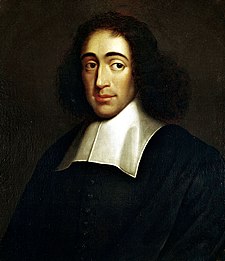
Baruch Spinoza
 

Tuesday, 27 August 2013

Benedict (Baruch) de Spinoza, his Jewish background

Benedict de Spinoza is one of the most influential philosophers in the history of Western thoughts and is recognised as one of the pioneers the Existentialism. He was born to a Jewish family exiled from Portugal to Amsterdam, Holland in his parents’ generation (http://wrex2009.wordpress.com/2010/03/17/maranos-ancestors-of-spinoza-the-philosopher/).
 
When he was born to a family of Jewish merchants in Amsterdam on 24 November 1632, he was ‘originally called Baruch, a name that he later translated into its Latin equivalent Benedict’ (http://www.newadvent.org/cathen/14217a.htm ). His father, Michael de Spinoza, was ‘a prosperous merchant and Warden of both the synagogue and the Amsterdam Jewish school’ (http://oregonstate.edu/instruct/phl302/philosophers/spinoza.html) and his mother, Hana Debora, was Michael’s second wife. It is also known that his father Michael married a third wife called Hester de Espinosa in 1641, when Baruch was about eight years old.
In his early years, Baruch studied at the Amsterdam Jewish school, where he showed ‘rapid progress in Hebrew and the study of the Talmud, and his teachers, especially Rabbi Saul Levi Morteira, had the greatest hopes of his future’ (http://www.newadvent.org/cathen/14217a.htm), in accordance with his father’s wish, to make him a Rabbi.

 Rabbi Saul Levi Morteira
It is uncertain how and when young Baruch began to divert from his firmly established reputation as a hopeful for becoming a Rabbi and accounts from biographers describing the period from 1651 to 1654 occasionally do not match coherently. By ignoring some subtle differences in these descriptions, important things that occurred in Spinoza’s life can be summed up in the following three; (1) by 1651, he could hardly get on with the Jewish community and ‘he was looked upon with suspicion by orthodox Jews’ (ibid), (2) he came across with the philosophy of Rene Descartes, and (3) he has acquainted with a private school manager called Franz van den Enden, who was also known as ‘ex-Jesuit and freethinker’ (ibid).


Sunday, 28 July 2013

A short biography of Henri de Bourbon

Additionally, it would be interesting to have a look at the situation that surrounded the actual lords, who may have contributed for William Shakespeare to establish three character lords in his play Love's Labour's Lost. As the following web site sums up, these French nobles -  the Baron (the Due) de Biron (or Berowne), the Due de Longueville and The Due de Mayenne (or General D’Aumont) - were ‘involved in a historical struggle between Henry of Navarre… and the Catholic League’ (
http://public.wsu.edu/~delahoyd/shakespeare/lllost1.html). To summarise the complex situation, it would be beneficial and efficient to have a look at a short biography of the key person: Henri de Bourbon.
Henri ‘was the son of Antoine de Bourbon and Jeanne d’Albret. On her death he succeeded to the kingdom of Navarre (1572). He took leadership of the Huguenot (Protestant) party in 1569. His marriage in 1572 with Marguerite de Valois was the occasion for the massacre of St. Bartholomew’s Day. Henri saved his life by abjuring Protestantism, but in 1576 he escaped from his virtual imprisonment at court and returned to Protestantism. When in 1584 Henri III named him heir presumptive, the Catholic League, headed by Henri 3rd Duc de Guise refused to recognize him and persuaded Henri III to send an army to force his conversion. In the resulting “War of the Three Henries,” Henry de Navarre defeated Henri III at Coutras (1587) but came to the king’s support in the troubles of 1588, and after Henri III’s death (1589) defeated the League forces at Arques (1589) and Ivrey (1590); he was unable to enter Paris until 1594, after he had abjured Protestantism… His war with Spain, the ally of the League, ended in 1598 with the Treaty of Vervins. In 1598 he also established religious toleration through the Edict of Nantes… In 1600 he married Marie de’ Medici, having had his earlier marriage annulled… –Columbia-Viking desk encyclopedia, 1953’ (http://www.lepg.org/people.htm).
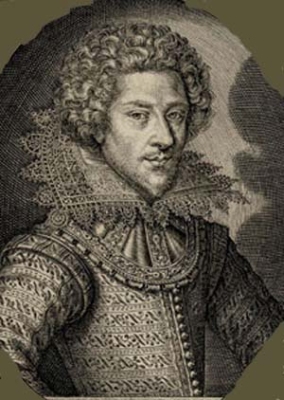
Henri de Bourbon
For reading the text in full:  http://wrex2009.wordpress.com/2012/01/05/three-character-lords-in-loves-labours-lost/

Wednesday, 24 July 2013

Lord Longaville and Dumain in W. Shakespeare's 'Love's Labour's Lost'

Similarly, to the origin of lord Biron - a character in a Shakespearean play Love's Labour's Lost - both following sources name ‘A Duc de Longueville’ (http://public.wsu.edu/~delahoyd/shakespeare/lllost1.html) or ‘the Due de Longueville’ (http://hudsonshakespeare.org/Shakespeare%20Library/Character%20Directory/CD_LLL.htm) as the sole candidate for the model of lord Longaville, the character. Both agree that he was also a general of (or an aide to) Henri de Bourbon and latter adds he was ‘a well-known figure in the Wars of Religion’ (ibid). Meanwhile, the latter further argues on the possible model for another lord, Dumain, as following:
The Due de Longueville
‘The Due de Mayenne, well known in Shakespeare’s London for his role in the French Wars of Religion, is usually thought to have provided the name Dumaine.  Unlike the originals of Longaville and Berowne, he was not an aide to the historical King of Navarre (Henri de Bourbon); rather, he was a principal enemy of the insurgent monarch, but this inconsistency would probably not have bothered either the playwright or his audience. An alternative, the less notable General D’Aumont, who was an aide to the King of Navarre at the time, has been proposed’ (ibid).
On the contrary, another source that deals with historical documents relating to Anthony Bacon, brother to the famous writer Francis, gives a different story, which says ‘The names of the three Lords are taken directly from the passport of Anthony when he was living in the Navarre territory (1583-92). The names are signed Dumain, Longaville, Biron(Berowne)’ (http://www.sirbacon.org/links/anthony_bacon.htm).

Tuesday, 23 July 2013

Armand de Gontaunt, the Baron de Biron and Love's Labour's Lost by W. Shakespeare

Navarre is the name of a region where the play - Love's Labour's Lost by William Shakespeare - takes place and the region was an independent kingdom in northern Spain and southern France in the sixteenth century. However, during the century, ‘Spain annexed most of Navarre’ (http://www.cummingsstudyguides.net/xLoveLab.html) in 1515 and eventually ‘in 1589, France annexed the rest of the kingdom’ (ibid).
By narrowing the range of time and place to the kingdom of Navarre in the sixteenth century, and replacing the fictional king Ferdinand in the play to Henri de Bourbon, the historical King of Navarre since 1572, who later became Henri IV of France, some candidates, who might have provided the bases for establishing the play's character lords, can be found; Armand de Gontaut, the Baron (Due) de Biron (Berowne), A Duc (the Due) de Longueville and The Due de Mayenne (or the General D’Aumont).
As for the model for lord Biron, plural sources agree to see the Baron (the Due) de Biron (or Berowne) as the sole candidate. One source says he was a French Protestant general, ‘who was a principal adviser to the historical King of Navarre (Henri de Bourbon)’ (http://hudsonshakespeare.org/Shakespeare%20Library/Character%20Directory/CD_LLL.htm), whilst another source basically says the same with adding his personal name Armand de Gontaut, who was Henri’s ‘military leader’ (http://public.wsu.edu/~delahoyd/shakespeare/lllost1.html) and ‘died in battle in 1592’ (ibid).
Armand de Gontaut
In addition, looking at biographic information of Henri de Bourbon, the King of Navarre, could provide a plausible explanation for the death of the Baron de Biron, because if he was serving for the King, he could go into the battle of Craon, which took place on May 1592 between his king, Henri IV, and Spain, the alley of the Catholic League. The result of the battle also gives more likelihood for the death of Biron, an important figure for Henri’s side, because it ended up ‘carrying a brilliant victory’ (http://www.multilingualarchive.com/ma/frwiki/en/Bataille_de_Craon) to the side of the League.

Monday, 22 July 2013

'Love's Labour's Lost' - basic info

Love’s Labour’s Lost is a play written by William Shakespeare. It is said that the play ‘was first printed in 1658’ (http://www.william-shakespeare.info/shakespeare-play-loves-labours-lost.htm) and was written relatively in the early days of the author’s writing career. It is also pointed out that the play is ‘the first play printed under the Bard’s name’ (http://public.wsu.edu/~delahoyd/shakespeare/lllost1.html) and it contains some ‘signs of early composition’ (ibid), although the play is also known for its complex use of language that ‘includes considerable punning and rhyming – more rhyming than any other Shakespeare play’ (ibid). As for its story’s historical background, the former simply says the play ‘is not based on any historical events or people’ (http://www.william-shakespeare.info/shakespeare-play-loves-labours-lost.htm). However, it would not be so difficult to find some clues that can connect the story and its historical background by conducting researches especially focusing on some characters’ names in the play, for example: Biron, Logaville and Dumain.
These three characters are described as ‘lords attending on the King’ (http://www.sacred-texts.com/sks/lll/lll.htm) in the Dramatis Personae section of the play. Their names are usually found just below the name of Ferdinand, another character who is described as ‘king of Navarre’ (ibid) and this normally implies that the ‘King’ three characters attend to is the ‘king’ listed just above them, in this case Ferdinand, whose name is also put on the top of the list.
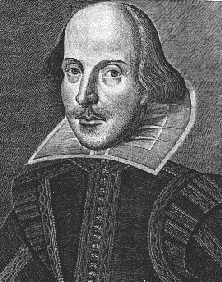
William Shakespeare

To read more... http://wrex2009.wordpress.com/2012/01/05/three-character-lords-in-loves-labours-lost/