Monday, 22 June 2015

The Ark of the Covenant and Eli the priest

The so-called Lost Ark, notably known for the Indiana Jones film, is referred in the Old Testament as a container of the original Ten Commandments, which was written on two tablets of stone, and therefore it is usually called the Ark of Covenant. It had been stored in the Temple of Solomon,  in Jerusalem, until the city was attacked and sacked by Nebuchadnezzar, king ofBabylon, in 566 BC. Since then, the Ark has been 'lost' from the history.
However, according to the Old Testament, this was not the first occasion where the Ark was taken away from the hands of Israelites. In the Book of Samuel, long before the construction of the Temple of Solomon, the following incident happened:
‘After Israel settled in Palestine, the ark remained in the tabernacle at Gilgal for a while. It was then moved to Shiloh till the time of Eli, between 300 and 400 years… when it was carried into the field of battle in an attempt to guarantee victory. However, it was taken by the Philistines (1 Sam. 4:3-11), who later returned it after seven months when they realized it was bringing a curse on them (1 Sam. 5:7-8).’(http://www.christiananswers.net/dictionary/ark.html)
The Ark of the Covenant

To explain why this took place upon the Ark of Covenant, it could be helpful to look at the priest called Eli, who was in charge of storing theArk then:
‘Eli served as a priest and judge of Israel for forty years (1 Sam. 4:18). It was not an easy time in which to exercise leadership. Israel had no centralized government, and “everyone did what was right in his own eyes” (Judg. 21:25)—including Eli’s own sons, Hophni and Phinehas. They abused the sacrificial system and committed immorality with the women at the tabernacle (1 Sam. 2:12–17, 22).
Eli was in a position to put a stop to these abuses, but he was… unable either to restrain his sons or to remove them from the priesthood, and he and his descendants fell under the scathing judgment of God (2:27–36).’(http://www.urbana.org/word-in-life-study-bible/eli-the-failed-leader-of-shiloh)

Wednesday, 17 June 2015

Richard II - after the abdication: a failed plot and death (1400)

Regarding the failed plot against Henry IV, which took place in January 1400, Shakespeare - in his play Richard II - depicts this incident through a family comedy in Act 5, which is attributed to Duke of York, his wife and their son Edward, who is described, in Scene 2, as Duke of ‘Aumerle that was; / But that is lost… And, madam, you must call him Rutland now’ (http://absoluteshakespeare.com/plays/richard_II/richard_II.htm). This reflects the historical facts that Edward ‘was created Earl of Rutland’ (http://www.shakespeareandhistory.com/richard-ii.php) in 1390 and was ‘created Duke of Aumerle in 1397’ (ibid) by Richard II’s favour. However, ‘He was stripped of his title of Duke of Aumerle and several other offices’ (ibid) by the new king Henry IV and ‘was not punished for his possible involvement in Gloucester’s death’ (ibid). Interestingly, in relation to Shakespeare’s dramatisation, some argue that ‘When a group of lords planned to murder King Henry in early 1400 it is said that it was Edward who warned the king of the conspiracy (although some chroniclers claim he was involved to an extent)’ (ibid). Despite it is unclear whether he was involved in the plot and to what extent, after this incident, history tells us that ‘Edward continued to be a faithful servant to the crown during the reign of Henry IV and… he succeeded to the title of Duke of York upon the death of his father in 1402’ (ibid).
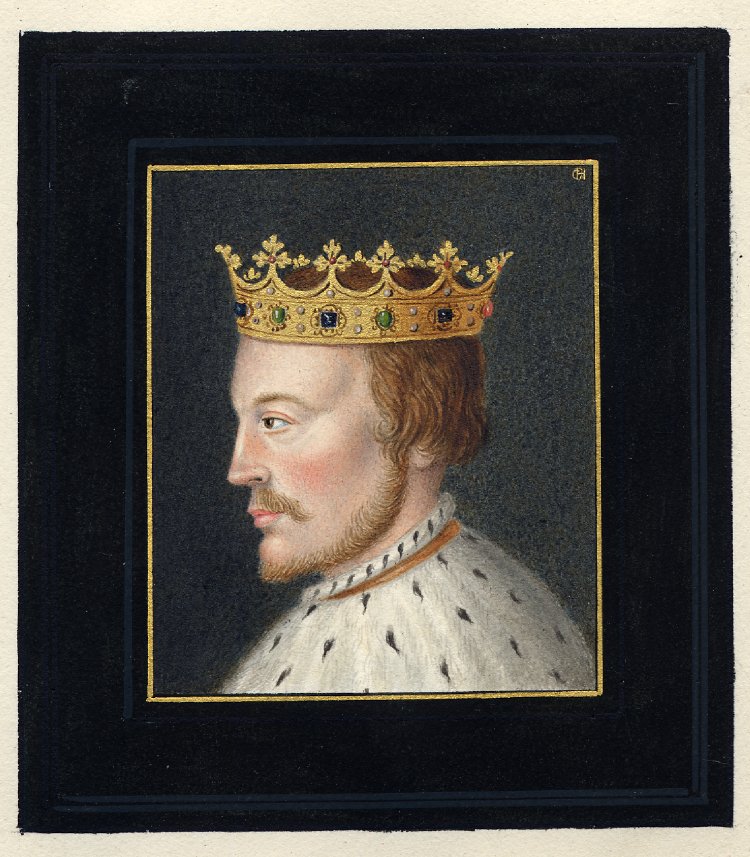
Richard II

Finally, as for the death of abdicated king Richard, whilst Shakespeare made up a character called Exton to be accused of murdering the once anointed monarch by his successor, Henry IV, in real history it is said that ‘By the end of February 1400, Richard of Bordeaux had starved to death…  Initially buried in Kings Langley, Henry V later placed Richard’s body in the tomb that he had designed for himself in the Confessor’s chapel of Westminster Abbey’ (http://www.bbc.co.uk/history/british/middle_ages/richardii_reign_01.shtml).

Monday, 15 June 2015

Richard II - the downfall (1399)

The story line of Richard II, a play by William Shakespeare, is based on historical events and especially after the opening scene, it  is basically depicted in tune with what actually happened in the final few years of the fourteenth century;
As shown at the beginning of the Act 2, John of Gaunt died in February 1399. Before his death and banishment of his son, Henry Bolingbroke, it is argued that ‘fearing for their position, Gaunt and his son made the king promise to uphold their inheritance if either died’ (http://www.bbc.co.uk/history/british/middle_ages/richardii_reign_01.shtml). Nevertheless, Richard ‘confiscated his vast estate, Henry’s birthright, and announced his exile was for life’ (https://books.google.co.uk/books?id=Oqk7AwAAQBAJ&pg=PT28&lpg=PT28&dq=henry+hereford+coventry+exile+years&source=bl&ots=6tS6ZfusSp&sig=bZsIyW);
Henry Bolingbroke

It could be said that this breaching of the promise on the king's side inevitably provoked the following event: ‘Early in July, whilst Richard was absent in Ireland, he (Bolingbroke) landed at Ravenspur in Yorkshire… and Richard, abandoned by his friends, surrendered at Flint on the 19th of August’ (http://www.luminarium.org/encyclopedia/henry4.htm). As for Henry’s intention when he launched the invasion, whilst Shakespeare emphasises on his noble cause – to bring back his duly inheritance – through his character’s words in Act 2:3, saying ‘It must be granted I am Duke of Lancaster… personally I lay my claim / To my inheritance of free descent’ (http://absoluteshakespeare.com/plays/richard_II/richard_II.htm) and even though it is argued  that ‘It is true that Henry gave out that he was only returning to recover his own confiscated property’ (http://www.warsoftheroses.co.uk/chapter_7.htm), in reality, it would be more plausible to presume that ‘Henry must have learnt from previous experience that such a rebellion could never be undertaken for limited purposes only’ (ibid), and probably with the king’s unpopularity in his consideration, Henry actually ‘did nothing to quench the ardour of his followers for the removal of a hated government, and allowed himself to be carried along on the popular tide which required the removal of King Richard II’ (ibid).
Then, some official procedures followed: ‘In the parliament, which assembled on the 30th of September, Richard was forced to abdicate. Henry then made his claim as coming by right line of blood from King Henry III… Parliament formally accepted him, and thus Henry became king’ (http://www.luminarium.org/encyclopedia/henry4.htm). This was followed by a failed plot against the new king Henry IV in January 1400, which ‘reminded Henry of Lancaster how great a liability the live Richard II would be’ (http://www.bbc.co.uk/history/british/middle_ages/richardii_reign_01.shtml) and, consequently abdicated Richard dies in the following month.

Friday, 12 June 2015

Richard II - banishment of Mowbray and Bolingbroke (1398)

Shakespeare created the opening scene of his Richard II based on an actual historical event and depicted the three main characters, regarding the death of Gloucester, in the following way: Henry Bolingbroke accuses Thomas Mowbray of plotting his death; Mowbray denies his involvement but acknowledges his neglect; whilst there is no implication of possible involvement of the king himself. In addition, accusation on Mowbray is further emphasised in the very next scene, where the widowed Duchess of Gloucester blames her husband’s death as ‘Mowbray’s sin’ (http://absoluteshakespeare.com/plays/richard_II/richard_II.htm). Nonetheless, the plot of the play after the opening scene goes basically in tune with what actually happened in the final few years of the fourteenth century. For example:
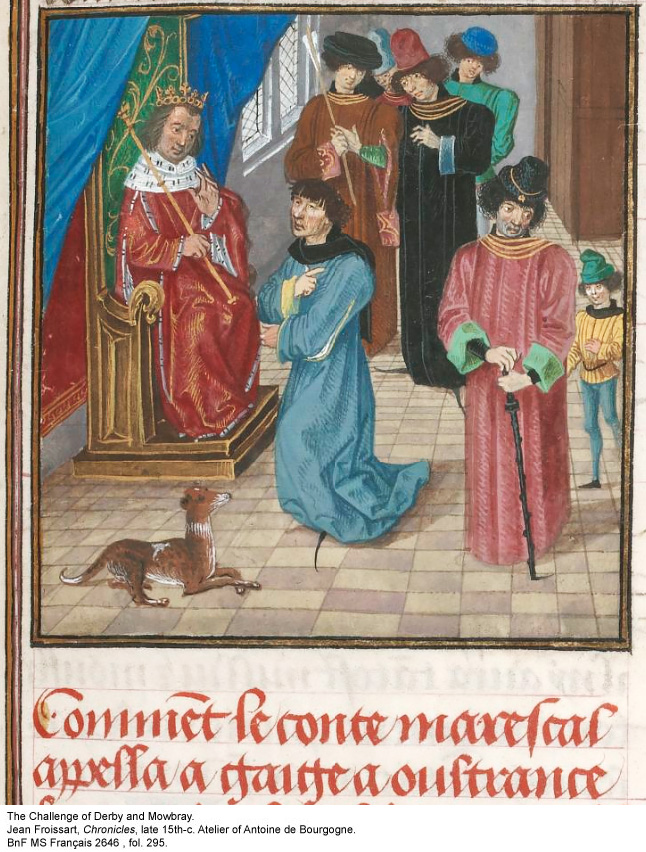
The Challenge of Mowbray and Derby (Bolingbroke), before Richard II

The dispute between Bolingbroke and Mowbray was decided to be settled by a single combat, which was to be held in Coventry, however, ‘when on the 10th of September 1398 everything was ready for the fight Richard interposed and ordered both combatants into banishment’ (http://www.luminarium.org/encyclopedia/thomasmowbray.htm). Then, ‘within fifteen days Henry, Duke of Hereford, was ordered to leave the realm, not to return for ten years, unless ordered by the King, on pain of death. He was, however, given a yearly income of £2,000. This was small comfort, for the secretary had one more announcement for him: his estates were to be confiscated. As for Mowbray… he was to leave the realm and never return, upon pain of death. He was given a yearly income of £1,000, and his property was confiscated. Both were then summoned to stand before the King and swear an oath that they would not continue the argument. This they did’ (https://books.google.co.uk/books?id=Oqk7AwAAQBAJ&pg=PT28&lpg=PT28&dq=henry+hereford+coventry+exile+years&source=bl&ots=6tS6ZfusSp&sig=bZsIyW). In addition, whilst Henry’s exile was ‘reduced by his father’s pleading by four years’ (ibid) before his departure, Mowbray ‘is said to have died of melancholy in Venice – though some sources say it was of “pestilence”, or plague’ (ibid) in September 1399.

Wednesday, 10 June 2015

Richard II - the death of his beloved wife (1394) and the period of tyranny that followed

Richard II’s wife Anne of Bohemia, with whom, he had ‘actually fell in love’ (ibid) and married in 1382, died in 1394. On one hand, her death contributed Richard to go for another foreign involvement in Ireland, on the other hand, it also helped Richard to secure ‘A 28 year truce with France in 1396, sealed with Richard’s betrothal to a French princess’ (ibid) Isabella, daughter of King Charles VI. Unlike Shakespeare’s adult character in his play Richard II, when the marriage took place in 1396, Princess Isabella was ‘not quite seven years old’ (http://www.history.ac.uk/richardII/isabelle.html). Regarding this marriage, it would be worth to mention that Duke of Gloucester, who dies in the following year, rather ‘disliked the peace with France and Richard’s second marriage with Isabella’ (http://www.luminarium.org/encyclopedia/thomaswoodstock.htm).
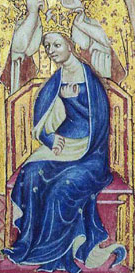
Anne of Bohemia
Furthermore, it is argued that the loss of his beloved queen, who ‘may have provided a restraining influence’ (http://www.bbc.co.uk/history/british/middle_ages/richardii_reign_01.shtml) could explain Richard’s reign in the following years, which ‘are traditionally described as a period of tyranny with the government levying forced loans, carrying out arbitrary arrests and murdering the king’s rivals’ (ibid). As for the latter, the king always had ‘resentment against the Appellants’ (ibid) and when he arrested three senior Appellants, in 1397, Gloucester was one of them along with Earl of Arundel and Earl of Warwick. Despite evidence of a plot against the king was ‘unclear’ (ibid), Warwick ‘was sent to prison’ (ibid) while ‘Arundel was executed’ (ibid). As for Gloucester, it is said that he ‘was probably murdered by Nottingham’s men in Calais’ (ibid). As a result of these brutal revenges, Richard ‘now handed out a slew of titles and land making, amongst others, Nottingham [Thomas Mowbray] the Duke of Norfolk and Derby [Henry Bolingbroke] the Duke of Hereford’ (ibid). In addition, the former also ‘received most of Arundel’s lands in Surrey and Sussex’ (http://www.luminarium.org/encyclopedia/thomasmowbray.htm).

For reading the text in full: https://wrex2009.wordpress.com/2015/05/25/richard-ii-the-play-and-the-history/

Monday, 8 June 2015

Richard II - The Appellant Lords (1384 - 1397)

To assess the situation and background of Duke of Gloucester’s death in 1397, it is quite important to trace back some related historical events for about a decade, especially focusing on the relationship between the king and the parliament.

In 1384, facing to critical conflicts against France and Scotland, King Richard II of England summoned feudal levy ‘for the last time in the Middle Ages’ (http://www.bbc.co.uk/history/british/middle_ages/richardii_reign_01.shtml). This, and the result of the battle against Scotland, caused Richard to face with a parliamentary backlash, in which, the Parliament ‘won the sacking of Chancellor de la Pole’ (ibid) and his impeachment. In the following years, in 1386-7, the Parliament ‘ended up examining royal finances and putting the Duke of Gloucester in charge. Expenditure was cut and grants to favourites reduced. The king’s authority had been fatally undermined as the narrow power base of his administration had nothing to fall back on’ (ibid). Nonetheless, Richard ‘sought advice from leading judges’ (ibid), who gave judgements favourable for the royal prerogative, saying ‘no minister could be impeached without the crown’s agreement and that it was treasonous to limit the royal power’ (ibid). This encouraged Richard, who now ‘charged his opponents with treason’ (ibid). The king’s opponents are known as the Appellant Lords, who ‘represented the traditional noble houses that Richard had always scorned’ (ibid), and Duke of Gloucester was one of the most prominent figures among them. The situation changed dramatically when Robert de Vere, Earl of Oxford ‘raised the men of Cheshire in defence of the king’ (ibid) in later 1387.
Robert de Vere, 9th Earl of Oxford


The Appellant Lords defeated de Vere in the battle and ‘then marched on London, met the king in the Tower, possibly removed him from the throne for a few days and then tried his leading councillors. The ultimate humiliation came with the execution of four of Richard’s favourite knights’ (ibid). However, the Appellants failed to rule sufficiently and, as a result, ‘the Commons became disillusioned and the king’s popularity increased’ (ibid). When a couple of Appellants Lords defected to the king, it meant that ‘in 1389 the king, now aged 22, could declare his own majority and will to rule of his own. The remaining appellants were removed from office as Gaunt returned to bolster the crown’ (ibid). Nevertheless, Richard’s various reforms ‘failed to address all the financial problems and the king still spent more than he earnt, due largely to his extravagant personal expenditure. In 1397 he gained a taxation grant without there being the requirements for war, for the first time; a dangerous precedent for the king to rely upon’ (ibid). 

Friday, 5 June 2015

Richard II - Death of Gloucester and possible involvements of the key figures (September, 1397)

Duke of Gloucester was born Thomas of Woodstock on 7 January, 1355. He was the ‘seventh and youngest son of the English king Edward III’ (http://www.luminarium.org/encyclopedia/thomaswoodstock.htm). Despite he was ‘made Earl of Buckingham by his nephew, Richard II, at the coronation in July 1377’ (ibid) and was created Duke of Gloucester, as ‘a mark of favour’ (ibid) from the king in 1385, to cut the long story short, by 1397 Gloucester was at odds with his nephew, Richard II, to the extent where, ‘it has been asserted that the duke was plotting to seize the king. At all events, Richard decided to arrest him’ (ibid). On 11 July 1397, Gloucester ‘was arrested by the king himself at his residence, Pleshey castle in Essex’ (ibid) and ‘was taken at once to Calais’ (ibid), where he died on 9 September, 1397, at the age of 42. Now, unlike Shakespeare’s historical play, it became clear that in real history, Richard had more role to play regarding the arrest and the death of Gloucester. Before delving into more details, it would make sense to examine what about the other key figures’ involvements.
Thomas of Woodstock, Duke of Gloucester

Despite Henry Hereford once ‘supported his uncle Thomas, Duke of Gloucester, in his armed opposition to Richard II and his favourites’ (http://www.luminarium.org/encyclopedia/henry4.htm) in 1387, he later changed his sides ‘probably through his father’s influence’ (ibid) and the situation in ten years later was that Henry, along with his father, John of Gaunt, was still on the side with ‘the king against Gloucester, and in 1397 was made Duke of Hereford’ (ibid). In the meantime, Thomas Mowbray’s involvement was allegedly more direct one. He had been appointed to captain of Calais by Richard II, a few years before 1397 and not only ‘He was present when Gloucester was arrested at Pleshey’ (http://www.luminarium.org/encyclopedia/thomasmowbray.htm), Gloucester ‘was entrusted to his keeping at Calais, and in September 1397 he reported that his prisoner was dead’ (ibid). As long as Gloucester didn’t die from natural causes, it would be plausible to speculate that Mowbray ‘was probably responsible, although the evidence against him is not conclusive’ (ibid). Nevertheless, others argue that ‘it is probable that he was murdered by order of the king on the 9th of September’ (http://www.luminarium.org/encyclopedia/thomaswoodstock.htm), with more details to follow:
‘At the beginning of September it was reported that he was dead. The rumour, probably a deliberate one, was false, and about the same time a justice, Sir William Rickhill (d. 1407), was sent to Calais with instructions dated the 17th of August to obtain a confession from Gloucester. On the 8th of September the duke confessed that he had been guilty of treason, and his death immediately followed this avowal. Unwilling to meet his parliament so soon after his uncle’s death, Richard’s purpose was doubtless to antedate this occurrence, and to foster the impression that the duke had died from natural causes in August. When parliament met in September he was declared guilty of treason and his estates forfeited’ (ibid).

Wednesday, 3 June 2015

Richard II: the dispute between Henry Bolingbroke and Thomas Mowbray (1398)

Shakespeare begins his play Richard II with describing a bitter quarrel between Henry Bolingbroke and Thomas Mowbray that takes place in front of King Richard II (Act 1:1). In which, Henry accuses Mowbray of following three accounts; (1) he ‘hath receiv’d eight thousand nobles / In name of lendings for your highness’ soldiers, / The which he hath detain’d for lewd employ-ments’ (http://absoluteshakespeare.com/plays/richard_II/richard_II.htm), (2) an allegation that ‘all the treasons for these eighteen years / Complotted and contrived in this land, / Fetch from false Mowbray’(ibid) and (3) he ‘did plot the Duke of Gloucester’s death… And consequently, like a traitor coward, / Sluic’d out his innocent soul through streams of blood’ (ibid). Against these accusations, Mowbray disputes with providing his side of defences; as for (1), he says, ‘Three parts of that receipt I had for Calais / Disburs’d I duly to his highness’ soldiers; / The other part reserv’d I by consent, / For that my sovereign liege was in my debt / Upon remainder of a dear account, / Since last I went to France to fetch his queen’ (ibid), as for (2), he at least admits that he did ‘lay an ambush’ (ibid) against Henry’s father, John of Gaunt, who is also present in the scene, however, he explains, ‘But ere I last receiv’d the sacrament / I did confess it, and exactly begg’d / Your Grace’s pardon, and I hope I had it’ (ibid), and as for (3), he simply denies his involvement by saying, ‘I slew him not; but to mine own disgrace / Neglected my sworn duty in that case’ (ibid). Now, it would be worthwhile to examine what actually happened in real history and what sort of background was behind the dispute between these nobles, who belonged to the same generation; Henry Bolingbroke, son of John of Gaunt – born on 3rd of April 1367, Thomas Mowbray, son of John de Mowbray – born in c. 1366, and Richard II - born in 1367.

In real history, things known about the quarrel between Bolingbroke and Mowbray are relatively limited and could be summarised in the following way: ‘during the second session of the parliament of September 1397, held in January 1398, Henry Bolingbroke raised with Richard the accusation that Mowbray had stated privately to him that Richard would seek vengeance on both of them in the way that he had taken vengeance on Arundel, Gloucester, and Warwick. The matter was made a formal charge of treason against Mowbray in a parliamentary committee that met after the end of the session (31 January 1398). The matter could not be resolved through evidence which meant that Bolingbroke and Mowbray would settle the matter by means of a duel on 16 September 1398′ (https://books.google.co.uk/books?id=QcXcLhJ8HVIC&pg=PR45&lpg=PR45&dq=1398+bolingbroke+mowbray&source=bl&ots=SeEJcr44se&sig=Yaj-GSN4Cp36mxx0Zc-PgEi3V-I&hl=en&sa=X&ei=1VvkVM9tyMuYBaSegdgH&ved=0CEkQ6AEwBw#v=onepage&q=1398%20bolingbroke%20mowbray&f=false). As Shakespeare depicted in Act 1 scene 3, on that day, ‘Richard intervened to stop the duel and exiled both parties’ (ibid). As quoted above, it seems that the nature of actual quarrel had been more complicated and more serious than what was later staged in the Elizabethan theatre. Along with Gloucester, whose name was also mentioned in Act 1 scene 1, the allegation includes names of other lords as well; namely Arundel and Warwick, to whom, it is regarded that King Richard had taken vengeance. Now, it would be worthwhile to examine what had happened before things got to this stage, especially concerning the death of Gloucester.

Monday, 1 June 2015

Plato's family background: Ariston, Pyrilampes and Periktione

As for Plato’s mother, it is said that ‘His mother was the niece of the wealthy nobleman, Critias and the sister of the rich and famous Charmides.’ (http://www.cals.ncsu.edu/agexed/aee501/plato.html) From this, it can be presumed that regardless to her marital status, Plato’s mother was originally born in a wealthy family background.
Subsequently, searching for information relating to ‘Pyrilampes’, Plato's potential stepfather, enables us to find following information:
‘… Periktion… after bearing Plato and his three siblings to Ariston, was later remarried to her own maternal uncle Pyrilampes, who thereby became Plato’s stepfather…’ (http://books.google.co.uk/books?id=3nCSw5Cr4PUC&pg=PA46&lpg=PA46&dq=Pyrilampes&source=bl&ots=tABDRODs0y&sig=KhRSfrOxyhJ7OMI5KTPU3K2fwjk&hl=en&ei=NwC4TejyDIPovQP06vjHDA&sa=X&oi=book_result&ct=result&resnum=7&ved=0CDwQ6AEwBg#v=onepage&q=Pyrilampes&f=false) 
Now, it became clear that Plato was born to a married couple of Ariston and Periktione. Then, due to the early death of Ariston, he was brought to the house of Pyrilampes, to whom his mother remarried. However, the questions are still remaining without being given answers fully: the question of the ancestry and whether Ariston and Pyrilampes were wealthy or not. For filling in the whole questionnaires, the following information could be useful and decisive:
‘Plato’s father Ariston descended from the early kings of Athens. His mother Perictione came from a similarly distinguished line that included the sixth-century legislator Solon. Plato’s father appears to have died when Plato was still a young child. His mother remarried to Pyrilampes, an associate of the statesman Pericles, being otherwise unable to support Plato and his siblings.’(http://www.gradesaver.com/author/plato/)
Solon

Thus, finally it reached a conclusion that it was Ariston, whose ancestry was associated with the early kings of Athens. In addition, although there can be found no direct reference on either men’s financial status, since the above quote explains the circumstance where Perictione (or Periktione) remarried as ‘being otherwise unable to support Plato and his siblings’, despite her own wealthy family background, this would suffice to conclude both Ariston and Pyrilampes were enough wealthy, at least to support Perictione and her children’s lives.

Thursday, 28 May 2015

Plato's family background: his mother remarried Pyrilampes

Plato is one of the most famous philosophers in the Western history. However, despite the sheer volume of writing by Plato himself, things known about his biographical information is relatively limited. For example, as for his family background, biographers generally describe in the following way: ‘He came from a family that had long played a prominent part in Athenian politics’ (Lee, 1977, p. 1). This brief blog entry would like to search for further information on this specific topic and would like to some more details on the typical description quoted above.
Plato
First of all, it doesn't require a huge effort for finding following information that says Plato was ‘born into an aristocratic and wealthy Athenian family. His father traced his ancestry in a direct line back to the early kings of Athens.’ (http://www.cals.ncsu.edu/agexed/aee501/plato.html) By comparing the two sources so far, it can be said that whilst the former only refers to ‘a prominent part’ his family played in the field of politics, the latter adds adjectives ‘aristocratic and wealthy’ to the family and limits the prominent feature to his paternal side.
However, making further research may lead to a different story: ‘His father died while Plato was young, and his mother remarried to Pyrilampes, in whose house Plato would grow up.’ (http://www.egs.edu/library/plato/biography/) Now, by giving a mother, a father and a possible stepfather, following questions come up to be answered; which father’s ancestry line can be traced back to the early kings?, and which one(s) came from aristocratic and wealthy family?

Monday, 29 December 2014

The concept of time, according to Thomas Mann

Literature treats time as one of the most fascinating sources for many authors’ imaginations. However passionately science tries to point out its possibility, actually, time travelling is only available within the extent of fictional stories so far. Authors can use, or even create, the concept of time freely as their stories require. Moreover, authors can philosophise the concept of time as groundwork for their own creations as well. For example, Thomas Mann summarises his opinions on the concept of time, relating to his creation of a story in its Foreword as following:
‘The story of Hans Castorp… belongs to the long ago; is already, so to speak, covered with historic mould, and unquestionably to be presented in the tense best suited to a narrative out of the depth of the past… 
In a word, the degree of its antiquity has noways to do with the passage of time — in which statement the author intentionally touches upon the strange and questionable double nature of that riddling element. 
But we would not willfully obscure a plain matter. The exaggerated pastness of our narrative is due to its taking place before the epoch when a certain crisis shattered its way through life and consciousness and left a deep chasm behind. It takes place — or rather, deliberately to avoid the present tense, it took place, and had taken place — in that long ago, in that old days, the days of the world before the Great War, in the beginning of which so much began that has scarcely yet left off beginning. Yes, it took place before that; yet not so long before. Is not the pastness of the past the profounder, the completer, the more legendary, the more immediately before the present it falls? More than that, our story has, of its own nature, something of the legend about it now and again.’ ( http://prosaicbytrinath.blogspot.com/2010/12/foreword-to-magic-mountain-thomas-mann.html)
Thomas Mann

Wednesday, 24 December 2014

'Time' according to Rob Bryanton

Although it is a common-sense that time seems to flow straightforwardly from the past to the future, people who try to explain complex sciences such as the String Theory may disagree with such a simple explanation. For example, Rob Bryanton mentions on this topic in a video attempting to explain the dimensions, from zero to tenth, in accordance with the String theory:
‘If we think of ourselves as we were one minute ago, and then imagine ourselves as we are at this moment, the line we could draw from the ‘one-minute-ago version’ to the ‘right now version’ would be a line in the fourth dimension. If you were to see your body in the fourth dimension, you would be like a long undulating snake, with your embryonic self at one end and your deceased self at the other.
… One of the most intriguing aspects of there being one dimension stacked on another is that down here in the dimensions below we can be unaware of our motion in the dimensions above…

… time (is)… actually twisting and turning in the dimension above. So, the long undulating snake, that is us, will feel like it is moving in a straight line in the forth dimension, but there will actually be, in the fifth dimension, a multitude of paths that we could branch to at any given moment. Those branches will be influenced by our own choice, chance and actions of others.
.. What if you wanted to go back into your own childhood and visit yourself. We can imagine folding the fourth dimension through the fifth, jumping back through time and space to get there… We can imagine our fourth-dimensional selves branching out from our current moment into the fifth dimension… The shortcut we could take would involve us folding the fifth dimension through the sixth dimension, which allows us to instantly jump from our current position to a different fifth dimensional line.
… In our description of the fourth dimension, we imagined taking the dimension below and conceiving of it as a single point. The fourth dimension is a line, which can join the universe as it was one minute ago to the universe as it is right now.’ (http://www.tenthdimension.com/medialinks.php)

For reading the text in full:  http://wrex2009.wordpress.com/2011/05/21/time-in-science-and-literature/

Monday, 22 December 2014

Henry VIII - the English Reformation and its early consequences

In the following year of Henry VIII's second marriage, ‘the Parliament pressed on further legislation abolishing all ecclesiastical dependence on Rome. But it was only in March, 1534, that the papal tribunal finally pronounced its verdict upon the original issue raised by the king and declared the marriage between Henry and Catherine to be unquestionably valid’ (http://www.newadvent.org/cathen/04024a.htm). Nonetheless, this came obviously too late. Clement VII ‘has been much blamed for this delay and for his various concessions in the matter of the divorce’ (ibid), which reduced Catherine’s position to be merely ‘referred to as the Princess Dowager in an act of parliament in 1534′ (http://www.thereformation.info/Divorce.htm). As for her daughter, Thomas Boleyn was sent ‘on 13 July 1534 to the Princess Mary to induce her to renounce her title and acknowledge herself an illegitimate child’ (http://www.luminarium.org/encyclopedia/thomasboleyn.htm). On 25 September, 1534, the Pope Clement VII died and he was succeeded by Paul III, who ‘used his power of excommunication against Henry, followed by his rescinding Henry’s title as “Defender of the Faith.” England’s parliament declared that title still valid. Pope Paul had to watch – powerless – as Henry “nationalized” all Roman Church property in England into his personal ownership and sold off these properties to the highest bidders among the aristocracy and the gentry. Roman priests in England were dismissed unless they swore an oath of conformity to Henry’s new Church. Those who would not were dispossessed of their positions and livelihood, or if made too much political noise they were executed as “recusants” – dissidents’ (http://www.fsmitha.com/h3/h18-eu1.htm). In addition, the Parliament of England in 1534 also ratified the ‘decision about the divorce’ (http://www.thereformation.info/Divorce.htm) between Henry and Catherine and passed ‘the Treasons Act, which made it high treason, punishable by death, to refuse to acknowledge the King as head of the Church of England’ (http://www.fsmitha.com/h3/h18-eu1.htm).
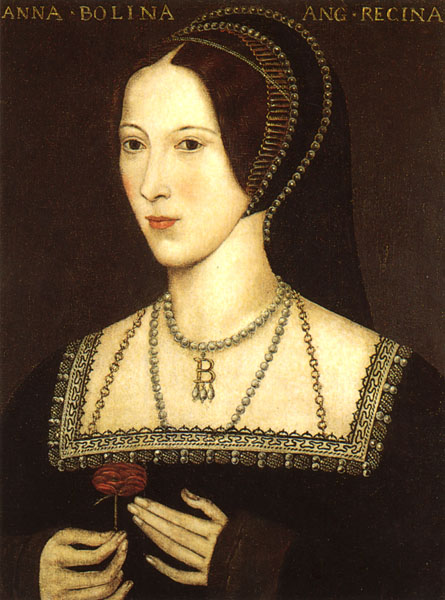
Anne Boleyn

In the years to follow, Catherine ‘continued with her appeal to Rome against the divorce and would listen to nobody but a few Spanish advisers. She rejected the universities opinion and procured from the Pope [contrary to the law as it happened] declarations and admonitions followed by excommunication and interdiction against the king and the whole realm… The Duke of Suffolk was subsequently sent to Bugden, near Huntingdon, where Catherine was… [and] proceeded to break up her court and dismissed many servants, leaving but a few who were clearly instructed to serve her as a princess, not a queen. Those who would not so serve her were dismissed’ (http://www.thereformation.info/Divorce.htm). She was separated from her daughter and lived in ‘several dank and unhealthy castles and manors with just a few servants. However, she seldom complained of her treatment and spent a great deal of time at prayer (http://tudorhistory.org/aragon/). Four months before the downfall of Anne Boleyn, who was arrested and executed on 19 May, Catherine died on 7 January 1536 ‘at Kimbolton Castle and was buried at Peterborough Abbey’ (ibid).

Friday, 19 December 2014

Henry VIII: secret marriage with Anne Boleyn and the break with Rome

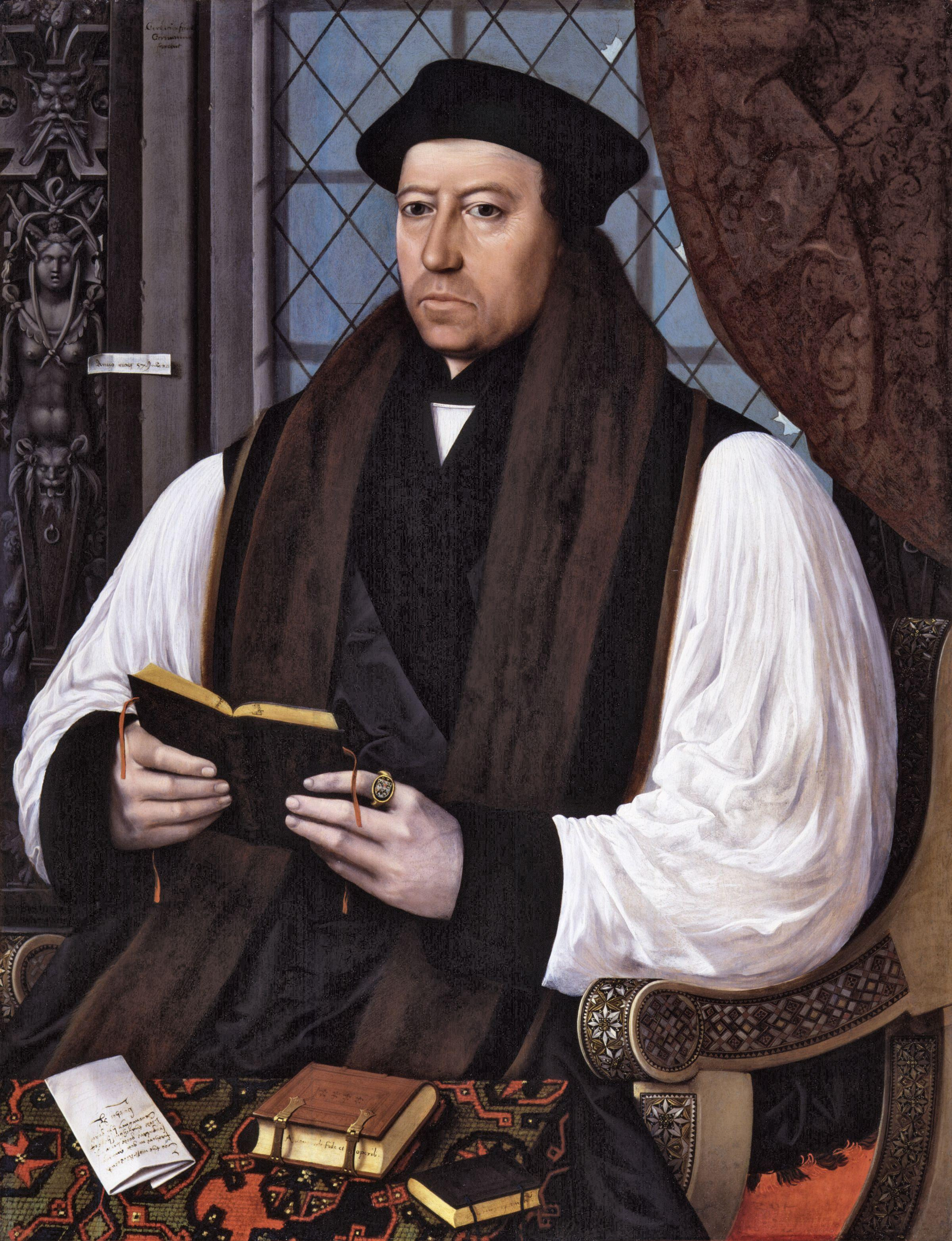
On 22 August 1532 William Warham, the Archbishop of Canterbury, died and this ‘allowed Henry to press for the institution of [Thomas] Cranmer’ (http://www.newadvent.org/cathen/04024a.htm) as his successor. Though the pallium was ‘granted to him by’ (ibid) pope Clement VII, ‘Almost immediately after his consecration Cranmer proceeded to pronounce judgment upon the divorce’ (ibid) between Henry VIII and Catherine of Aragon.
It would be appropriate to point out that dates given within this blog entry are basically on the Julian Calendar, in which, ‘New Year’s Day had been March 25... Thus, 24 March 1532 was followed the next day by 25 March 1533′ (http://books.google.co.uk/books?id=MvXREWlRtPUC&pg=PA190&lpg=PA190&dq=julius+calendar+1532+new+year%27s+day&source=bl&ots=jK3UzKynyl&sig=). Therefore, in theory, the following accounts should have occurred after the consecration of Crammer: ‘In January 1532 Parliament met again’ (http://www.thereformation.info/Divorce.htm) and Henry attacked ‘the oath of the clergy to the Pope that had been disclosed by [Thomas] Cromwell’ (ibid) and replaced it with the oath of the clergy to the King, which ‘was the physical act that made the break with Rome a reality. But it still kept catholicism as the faith’ (ibid). In the meantime, the Pope ‘prepared’ the third breve addressed to Henry ‘on 25 January 1532 which named Anne [Boylen] for the first time and firmly rebuked Henry for cohabiting with her. It further ordered him to dismiss Anne and take back Catharine; if he failed to do so within one month of receiving the breve he would be excommunicated’ (ibid). However, this breve was actually ‘posted at Dunkirk and Bruge on 21 and 23 January 1533′ (ibid), nearly a year later.
Thomas Cranmer

Coincidently, the day Clement ‘prepared’ the third breve fell upon one of the same dates when Henry alleged to contracted a secret marriage with his mistress. By that time, it became clear that Anne Boylen was pregnant and in order to secure the legitimacy of the child to be born, Henry ‘contracted a secret marriage with Anne Boleyn’ (ibid) on either ‘St Erkwald`s Day, 14 November 1532′ (ibid) or ‘about St Paul`s Day, 25 January’ (ibid) 1532*. On this occasion, however, Cranmer ‘was not present and did not learn of it until a fortnight later’ (ibid). Meanwhile, ‘the convocations of the clergy and a meeting of parliament concluded that appeal to Rome was not necessary’ (ibid). As things got this far, Henry ‘declared his marriage to Catherine invalid’ (http://www.fsmitha.com/h3/h18-eu1.htm), and as for his marriage to Anne, ‘Cranmer, in May, 1533, declared to be valid’ (http://www.newadvent.org/cathen/04024a.htm). As a result, ‘Anne Boleyn was consequently crowned on June the 1st’ (ibid).
*The blog author modified the year given as 1533 in the quoted web site to 1532 because in the Julian Calendar, January 1533 comes after May 1533, when Cranmer acknowledged this secret marriage valid.
In the meantime, Catherine ‘was summoned on 10 May 1533 to appear in a matrimonial court but did not appear. Neither did she appear on the next fifteen days on which she was cited. Eventually she was cited for contumacy and by the assent of those present declared divorced on 25 May, and the marriage declared void and of no effect’ (http://www.thereformation.info/Divorce.htm). Now, despite the huge efforts Henry had made for securing him a male heir, ‘On 7 September 1533 Queen Anne gave birth to Elizabeth’ (ibid), a girl child.

Tuesday, 16 December 2014

Henry VIII - points of dispute in the divorce case and 'the supreme head'

Whilst the Pope Clement VII was busy working on negotiating with the Holy Roman Emperor in 1529, Henry VIII ‘finally sent the Earl of Wiltshire, Dr Lee, Bishop of York, and Stokesley Bishop of London as delegates to the Pope then at Bologna where he was meeting with the Emperor, Charles V. Again Clement ducked the issue and said he would consider it when he returned to Rome… Henry’s response was to… obtain the opinion of the Divines of leading universities in Europe for their opinion about a divorce’ (http://www.thereformation.info/Divorce.htm).
It would be important to summarise the points of dispute claimed from the both sides: while Henry argued that his marriage to Catherine had been against God’s law, making use of Leviticus 20:16 to back up his case, Catherine was adamant that ‘she and Arthur, her first husband and Henry’s brother, did not consummate their marriage and therefore were not truly husband and wife’ (http://tudorhistory.org/aragon/). Moreover, on contrary to Henry’s claim, the Rome dissected what Leviticus had actually meant was ‘you should not marry your brother’s wife while he was still alive’ (http://www.historylearningsite.co.uk/henry_catherine_divorce.htm). In addition, opposing to what shall happen as a result of such forbidden marriage, ‘Catherine and Henry were far from childless, and still had one living child. But that child was a girl, and didn’t count in Henry’s mind’ (http://tudorhistory.org/aragon/). It should be noted that Catherine also ‘appealed directly to the Pope… since her nephew was Charles V, the Holy Roman Emperor… not only to retain her position, but also that of her daughter Mary’ (ibid).
Consequently, the twelve of the Divines of leading universities in Europe, who responded to Henry’s request, concluded as following: ‘affirming plainly his marriage, in case as it standeth, both to be unlawful, and repugnant to the express word of God: and that no man is able to dispense with the same’ (http://www.thereformation.info/Divorce.htm).
Henry VIII

In the following year, it seems that Henry changed his strategy for appealing his case directly to Catherine’s nephew and appointed Thomas Boylen, in January 1530, along with other bishops, ‘to go to the Emperor Charles V, and explain to him the king’s reasons for seeking a divorce from his aunt, Catherine of Arragon. The pope [Clement VII] and the emperor at that time had met together at Bologna, and the ambassadors were further commissioned to treat with both of them, and with other potentates, for a general peace. But, of course, the main object was to counteract, as far as possible, the influence which the emperor would bring to bear upon the pope in favour of Catherine. The ambassadors, however, failed to impress the former with the justice of the king’s cause; and the latter very naturally kept his sentiments to himself’ (http://www.luminarium.org/encyclopedia/thomasboleyn.htm). This followed an issue of breve by Clement on 7 March 1530, in which, the Pope indicated that ‘he knew of Henry`s intention to seek a decision elsewhere’ (http://www.thereformation.info/Divorce.htm) and pronounced ‘censure against those who threatened to have the king’s divorce suit decided by an English tribunal, and forbade Henry to proceed to a new marriage before a decision was given in Rome (http://www.newadvent.org/cathen/04024a.htm). In the beginning of the following year, on 5 January 1531. the Pope further ‘issued a breve [warning letter] that peremptorily warned of excommunication if Henry proceeded to a second marriage before the existing marriage state was decided’ (http://www.thereformation.info/Divorce.htm). Reacting to this, in March 1531, Henry ‘sent the matter before Parliament’ (ibid), in which, it was explained that Henry had consulted with ‘the chief universities of all christendom, to know their opinion and judgment’ (ibid) on his marriage to Catherine, and ‘The replies from the universities were produced and read out. The significance of the decisions was to demonstrate that the Pope was not what he claimed, and secondly, he presumptuously took unto himself powers that he was not able to dispense’ (ibid). As a result, the prelates were made to call Henry ‘”the supreme head of the Church of England” which they had never admitted before’ (ibid) and consequently the king ‘extorted a vast sum of money from the English clergy upon the pretext that the penalties of præmunire had been incurred by them through their recognition of the papal legate, and soon afterwards he prevailed upon Parliament to prohibit under certain conditions the payment of annates to Rome’ (http://www.newadvent.org/cathen/04024a.htm). Thus, in effect, the English Reformation has been launched.

Monday, 15 December 2014

Pope Clement VII's escape and Cardinal Thomas Wolsey's downfall

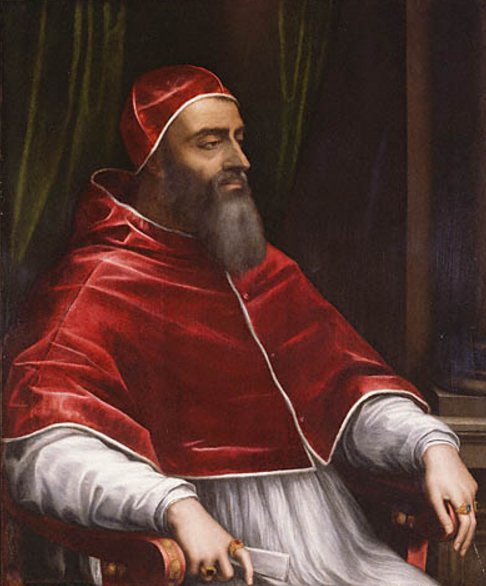
After the summer, regarding to Henry VIII's divorce issue, Cardinal Campeggio, the papal representative, went back to ‘England by the end of September, 1528, but the proceedings of the legatine court were at once brought to a standstill by the production of a second dispensation… in the form of a Brief… The production of the Brief, now commonly admitted to be quite authentic, though the king’s party declared it a forgery, arrested the proceedings of the commission for eight months’ (http://www.newadvent.org/cathen/04024a.htm), while pope Clement VII managed to escape from being a prisoner in the Castle of St. Angelo by disguising himself as a peddler and ‘returned to a depopulated and devastated Rome… in October 1528′ (http://www.fsmitha.com/h3/h18-eu1.htm).
Pope Clement VII


Eventually, on 8 November 1528, Henry ‘gave a masterful speech to the country’s nobles at Bridewell, London… explaining that Catherine was noble and virtuous and that in other circumstances he would marry he[r] again. But because of what had happened he lived in “detestable and abominable adultery” (http://www.historylearningsite.co.uk/henry_catherine_divorce.htm). This was followed by a change in the continental political tide that saw Francis I and Charles V ‘agreed on a Treaty at Cambrai… As a result Wolsey’s grand plan for conservative reform and England holding the balance of power in Europe, fell by the wayside’ (http://www.thereformation.info/Divorce.htm). This was a fatal blow for Cardinal Wolsey’s political life, who ‘was ordered to leave London and live in much lesser circumstances in York [where he was the archbishop]’ (http://www.historylearningsite.co.uk/henry_catherine_divorce.htm). Additionally, ‘In a final and almost bizarre act the kings’ officials ransacked Campeggio’s bags before he was allowed to leave the country at Dover. Henry had hoped to find the decretal which might have been used to secure the divorce. But it was not found’ (http://www.thereformation.info/Divorce.htm).

To read the text in full: http://wrex2009.wordpress.com/2014/11/21/the-divorce-between-henry-viii-and-catherine-of-aragon/

Friday, 12 December 2014

Pope Clement VII's initial reaction to Henry VIII' plea for divorce

Meanwhile, in the continent, Francis I of France and Charles V, the Holy Roman Emperor, were at war and Pope Clement VII, who supported the former, had to witness German mercenaries came to attack Rome; ‘On the 5th of May they reached the walls, which… were almost undefended. Clement had barely time to take refuge in the Castle of Sant’ Angelo, and for eight days the “Sack of Rome” continued amid horrors almost unexampled in the history of war (http://www.newadvent.org/cathen/04024a.htm). In this circumstance, Henry ‘asked Cardinal Wolsey to appeal to Pope Clement VII for an annulment [of his marriage to Catherine] … But, unwilling to anger Catherine of Aragon’s nephew – the most powerful ruler in Europe, the Holy Roman Emperor Charles V – the Pope refused’ (http://www.bbc.co.uk/history/people/henry_viii). More precisely, it is argued that Clement simply ‘did what he had to do – prevaricate and procrastinate. What this charade demonstrated was that the earthly concerns of the prelates – their personal security and wealth, was the determining factor even in the weightiest of decisions. Indeed it was the Church’s involvement in temporal politics that eventually determined the Pope’s decision and had very little to do with the rule of the Scriptures or perceived rules of consanguinity’ (http://www.thereformation.info/Divorce.htm). Having faced to the Pope’s refusal, Henry and Wolsey sought for an alternative way, to ask ‘the Pope to allow the matter to be resolved “locally”, ie Wolsey as Papal Legate… [This was] to declare the Pope incapacitated and Wolsey would hold a Convocation of cardinals to agree the matter of the divorce. In the event a second papal representative, Cardinal Campeggio, was sent to help Wolsey determine the facts – with instructions to prevaricate while Clement sought to extricate himself from the dominance of Charles V. Importantly the Pope declined them any plenary powers and reserved the decision to himself’ (ibid).

Charles V, the Holy Roman Emperor


With these instructions in his mind, Cardinal Campeggio ‘first tried to dissuade Henry from divorce and when he got nowhere turned to Catherine to seek her agreement to the king’s wishes’ (ibid). It would be worth to point out that ‘At first, Catherine was kept in the dark about Henry’s plans for their annulment and when the news got to Catherine she was very upset’ (http://tudorhistory.org/aragon/). Rejections from the both sides made the cardinals – Campeggio and Wolsey – being ‘left with nothing else to do but proceed to trial with the instruction [to Campeggio] that the decretal was only to be shown to the king, and then burnt' (http://www.thereformation.info/Divorce.htm). Regarding to this document, it is also argued that ‘The commission was to be shown to no one, and was never to leave Compeggio’s hands. We do not know its exact terms’ (http://www.newadvent.org/cathen/04024a.htm). Whichever the case, ‘Both Henry and Catherine appeared before the court and made representations… On 23 July 1528 the court was due to report its decision at which Campeggio foolishly sought to invoke the Roman courts’ timetable and take two months vacation until October’ (http://www.thereformation.info/Divorce.htm).

For reading the text in full: http://wrex2009.wordpress.com/2014/11/21/the-divorce-between-henry-viii-and-catherine-of-aragon/